Sydney to Coffs Harbour backloading plan
The lounge is definitely going. The outdoor setting might sell. A relative has offered to take the spare bed, but has not collected it yet. That is a normal place to start a move—and a good reason to settle the load before confirming shared truck space.
Interstate Removalists Co can help you turn those loose ends into a Sydney to Coffs Harbour furniture enquiry. Use this guide to record what is travelling, what must happen before pickup and whether the destination can receive it.

Start with the decisions that change the backload
For Sydney to Coffs Harbour backloading, the practical question is whether your prepared goods, access and availability fit a suitable transport arrangement. An unsettled inventory makes that harder to assess. So does a destination described only as “near Coffs” when the last part of the trip involves a restricted driveway.
IRCO uses those details to assess the work you are asking us to arrange. This guide focuses on closing the gaps before booking. For the broader service options, quote inclusions and household moving advice, see our Sydney to Coffs Harbour removalists page.
This move stays within NSW. The guide applies to selected furniture and household loads; it does not assume a border crossing or promise a fixed departure timetable.
Give every undecided item a decision date
Make three groups: confirmed to travel, confirmed to stay and awaiting a decision. Keep the third group visible in the enquiry. A dining setting still advertised for sale may become part of the load if the buyer does not arrive.
| Item and status | What remains to resolve | What to tell IRCO |
|---|---|---|
| Lounge: travelling | Measure each section and identify whether the feet are removable. | Send current photos, dimensions and the agreed preparation request. |
| Dining setting: undecided | Set a final date for the sale or keeping decision. | Disclose it as a possible addition and ask when the load must be settled. |
| Spare bed: staying | Confirm the separate collection will happen before key return. | Exclude it clearly from the removal list once that decision is final. |
| Cartons: estimate | Finish the cupboard and shed checks, then update the count. | State the current estimate and when you can provide the final number. |
Ask us how to handle the uncertain item in the quote. It may need assessment as an alternative load or a later revision; space for additions cannot be assumed. Agree when you will send the final inventory and keep a dated copy of the version accepted with the booking.
Once the list is settled, physically separate goods that are staying where practical. Keep walkways clear and make sure the person releasing the load has the same list. That matters when a family member is supervising collection while you are already in Coffs Harbour.
“Travelling” and “ready for collection” are different stages
A confirmed table can still need its legs removed. A cabinet may have loose glass shelves, and a bed may need a labelled fittings pack. Add the preparation task and the responsible person beside each relevant item.
At Interstate Removalists Co, we would rather discuss that work with you during quoting than leave you unsure on collection morning. If you want us to assess packing, dismantling or reassembly, identify the pieces and tasks. If you are doing them yourself, allow time to follow the manufacturer's instructions and update the item description after preparation.
For each piece, record its travelling form: one assembled cabinet, a tabletop and four legs, or a bed frame with separately identified components. Photographs help explain unusual shapes and vulnerable parts. Measurements describe the goods; IRCO still needs to assess the space and handling required.
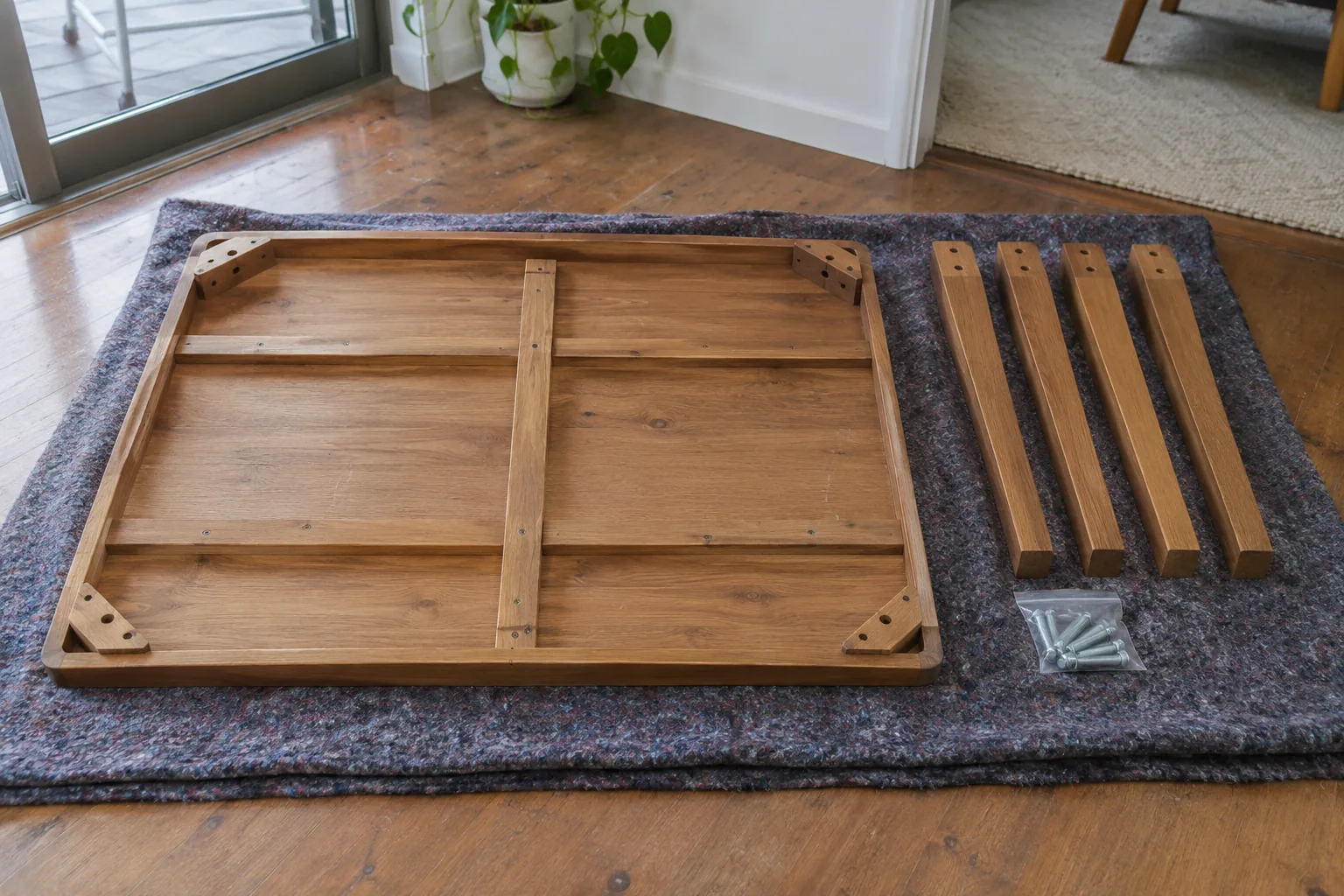
Use our flat-pack furniture guide for dismantling decisions and component identification. For a kitchen or fragile items that need more time than you have, ask about IRCO packing assistance. The aim is a complete, prepared consignment with agreed responsibilities.
A useful final check: Can the collection contact point to every item on the accepted list, explain what is staying and identify any preparation the crew has been booked to do? If not, resolve that with IRCO before pickup.
Offer dates that remain workable after the details are checked
“Any time next week” is only useful if the goods can actually be released and received throughout that period. Check who has the Sydney keys, when packing will finish and which Coffs Harbour days have a receiver available.
Separate your preferred day from a firm limit. You might prefer a Monday collection but be able to offer Tuesday; a Wednesday key return is a different constraint. Include any seller's release hours or booked building access in the same message. IRCO can then assess the real opportunity for shared transport.
Agree the collection and delivery arrangements offered before committing. If your own journey happens earlier, keep the essentials with you and nominate a collection contact. If no receiving day works, ask us about another arrangement rather than accepting a window that depends on someone becoming available later.
Send a short access record for the Coffs Harbour address
Use the exact street address and locality, then explain how furniture gets from the vehicle to its intended room. “Coffs Harbour area” can hide a substantial difference between kerbside access and an outlying property. IRCO needs the requested endpoint to assess the service properly.
For a street-access home or unit
Photograph the proposed stopping area, nearby signs, entrance and any stairs or narrow turns. State the floor level and whether there is an approved lift appointment. If you are not there yet, ask the property contact for current information; a real-estate photo of the living room rarely shows the whole carrying route.
Check the City of Coffs Harbour's CBD parking guidance where relevant, and verify the signs at the address. A location convenient for a passenger car is not automatically suitable for unloading furniture.
For a long driveway or property outside the town centre
Include three useful views: the entrance from the approach, the most restrictive part of the driveway, and the unloading and turning area. Add measurements where they are safe to obtain and name anything you have not verified, such as a structure's load limit. Do not describe a bridge as suitable just because a car uses it.
Refer to our rural property access guide for the detailed assessment checklist. In this backloading enquiry, the key decision is whether the proposed collection and delivery arrangement can serve the property as described, or whether another stage needs to be considered and quoted.
Check Live Traffic NSW and the City of Coffs Harbour disaster dashboard for current public-road and local incident information. Those sources do not certify a private driveway. Tell IRCO if works, rain or a changed entrance affect the information you supplied.
Bring the load, access and quote back together before accepting
A useful confirmation has one current inventory, both addresses, agreed collection and receiving arrangements, preparation responsibilities and a clear total for the included work. Match the quote to that version of the plan, especially if you removed a large item or added another stop during the discussion.
- Load: have all undecided items been resolved or explicitly allowed for?
- Preparation: who packs, dismantles, protects and reassembles the agreed items?
- Access: is the quote based on the actual carrying route and unloading location?
- Dates: can the named contacts meet the offered collection and delivery windows?
- Cost: are any minimum, extra handling, holding and final-delivery charges explained?
The NSW Government removalist checklist is a useful independent reference for a written quote and contract. Read the IRCO terms and conditions alongside your offer, and arrange any goods insurance you require with an insurer.
If the load or receiving plan changes afterwards
Send IRCO a clear update: what changed, which inventory version it affects and whether the dates or access also changed. For example, an outdoor setting that did not sell needs dimensions and a preparation description, not just “a couple more things”. Wait for the revised arrangement to be confirmed.
If a delivery address is delayed or becomes inaccessible, discuss the options promptly. Holding, an alternative destination or a separate final delivery each changes the job. Our guide to storage between homes helps you identify the questions before agreeing to that additional stage.
Put IRCO's planning help to work for your move
You can send a straightforward list and a few useful photographs; it does not need to be a polished document. Interstate Removalists Co can help you identify the details that need resolving and assess suitable Sydney to Coffs Harbour removal or backloading options.
Build your Sydney to Coffs Harbour backloading brief
Use these fields to bring the decisions together. Leave uncertain details marked “to confirm”, and avoid entering access codes or private documents. Building the summary does not send an enquiry or reserve transport.
Backloading planning questions
Can I ask IRCO for a quote before deciding on every item?
Yes. Separate confirmed goods from undecided pieces and give each uncertain item a decision date. Ask how the quote will allow for it and when the final inventory is needed. Extra truck space is not reserved unless included in the agreed booking.
What if furniture advertised for sale does not sell?
Tell IRCO before collection, with the item's dimensions, preparation needs and updated inventory. Ask for the effect on price and capacity to be assessed, then confirm the revised arrangement before including it in the load.
Should I give the assembled or dismantled furniture measurements?
Explain how the item will travel and who will prepare it. Supply dimensions and photos of the relevant pieces, and identify any dismantling still to be agreed. The dimensions help IRCO assess the load; they are not a guaranteed truck-space allocation.
Can a family member release the furniture in Sydney?
Yes, nominate an authorised contact who can provide access during the agreed collection arrangement. Give them the final inventory, preparation responsibilities and your contact details, and make sure they know which items are staying.
Is a flexible pickup enough for backloading?
The receiving arrangement needs to work too. Provide both the Sydney collection limits and the days the Coffs Harbour property can receive. IRCO assesses available transport against the complete request.
What if a truck cannot reach the Coffs Harbour house?
Describe the restriction and send access details before booking. IRCO can assess whether an alternative unloading point or another handling stage should be considered. Any extra work, vehicle arrangements and costs need to be agreed.
Does a backload automatically include room placement and assembly?
Check the particular quote. Backloading describes the transport arrangement, while placement, stairs, dismantling and assembly are service details to specify. Tell IRCO the work you need at each address.
Does this guide cover an interstate route?
No. Sydney to Coffs Harbour is a move within NSW. Use the actual suburbs and addresses in your enquiry so Interstate Removalists Co can assess the route, property access and receiving arrangements accurately.