Rural property removals: truck access and the final kilometres
Moving to an acreage, farm or rural home? The last stretch from the road to the house deserves as much attention as the interstate journey.
This guide helps you show Interstate Removalists Co the access that a postcode cannot explain, so the truck, unloading point and final furniture delivery can be planned together.
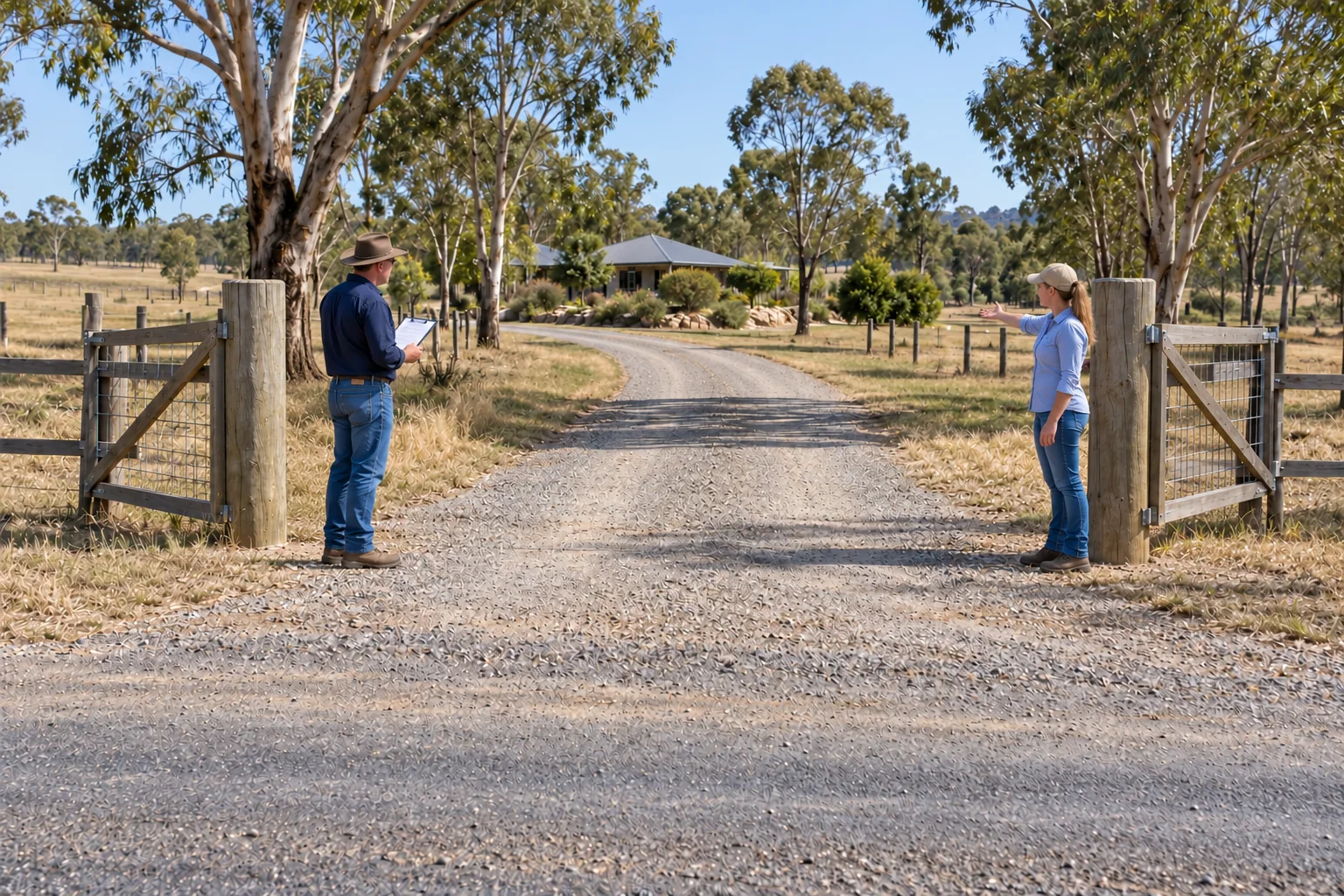
The address is the start of the rural delivery plan
A removal truck may reach the nearest town easily while the last few kilometres need careful planning. A tight gate turn, an unverified private bridge or a soft area beside the house can determine where unloading actually happens.
When enquiring about IRCO rural and remote removals, describe the route from the last suitable public-road junction to the final furniture destination. This guide helps with household moves to farms, acreages, rural homes and remote properties. The same checks apply when the rural address is the pickup.
Resolve three separate questions: can the proposed vehicle use the approach roads; can it safely enter, unload and leave the property; and can the furniture reach the agreed rooms from that unloading point?
Interstate Removalists Co can assess the property information alongside the inventory and dates. Explain uncertainty early. That gives the office the chance to consider a different vehicle arrangement, delivery point or timing before furniture is on its way.
Give directions to the correct gate, not just a map pin
Provide the full street address, locality, postcode and property name where used. Add a map pin at the intended vehicle entrance and written directions from an identifiable junction. A pin placed over the house may direct navigation to a service track or another boundary.
Number the access points if there is more than one: “Gate A — household delivery entrance” and “Gate B — machinery access, not part of this plan”. Include a clear photo of the chosen gate and the property-number sign. Describe the last turn, distance along the access road and any fork where a driver could take the wrong track.
Tell IRCO about locked gates, scheduled access, weak mobile reception and who will meet the vehicle. Arrange a contact method before the truck reaches a signal gap. Share access codes privately with the booking contact rather than putting them on a public direction sign.
If a tenant, caretaker or agent will receive the goods, make sure they have the same entrance instructions and authority to open the property. Confirm their availability against the agreed delivery window.
Check the entrance, driveway and exit as one route
Walk the proposed route where safe and photograph each change. Measure clear openings and identify uncertain features. A successful delivery by a ute, courier van or different truck does not establish that the proposed removal vehicle can follow the same path.
| Feature | Information to provide | Question to resolve |
|---|---|---|
| Road-to-gate turn | Approach direction, corner shape, shoulder, nearby ditch and photos from both sides | Can the proposed vehicle enter without relying on unsuitable ground or unauthorised space? |
| Gate and narrow sections | Clear opening with gates secured open, posts, projecting hardware and restricted sections farther along | Is there sufficient clearance along the complete route for the actual vehicle? |
| Driveway surface and slope | Sealed or unsealed surface, gradients, sharp crests, ruts and places affected by rain | Is the route suitable in the expected conditions, including entry and departure? |
| Bridges, culverts and cattle grids | Location, visible signs, available owner records and any known damage or restrictions | What reliable evidence is needed to establish suitability for the vehicle and load? |
| Overhead obstructions | Locations of powerlines, trees, roofs and entrance structures; ground-level photos from a safe position | Does the route need specialist advice or another approach before access can be agreed? |
| Unloading and turning area | Available space, surface, slope, nearby structures and the route back out | Can the vehicle stop, unload and leave under a workable handling plan? |
Keep the date with the photos. A dry-weather image taken before driveway works or heavy rain may no longer represent the property. Ask the office which further measurements or assessment are needed instead of choosing a universal gate-width or turning-circle figure from a generic checklist.
Identify road restrictions and unverified structures
Tell the operator about signed load limits, narrow bridges, seasonal closures and restrictions on the final public roads. For a Queensland destination, the government’s heavy-vehicle road rules explain how signed bridge and gross-mass limits apply. The operator needs to check the route under the applicable state or territory arrangements for the actual vehicle.
Private infrastructure needs its own answer. A photograph can show a bridge or cattle grid, but it cannot certify its load capacity. Ask the property owner for available documentation and let the operator identify any further competent assessment required. Avoid estimating a safe load from appearance or from what crossed it years ago.
Identify septic systems, drainage structures and other areas where vehicles should not travel or park. A broad lawn can look like useful turning space without being suitable for a loaded truck. Mark the proposed route and excluded areas on the property sketch.
Overhead powerlines also need specific attention. Energex’s trucking safety guidance explains the need to identify electrical assets and applicable clearances. Report their location; do not approach a line with a tape measure, move it or assume a visible gap proves safe access. Use the relevant electricity network’s advice where required.
Agree what happens if the access changes after rain
Describe the driveway’s known behaviour in wet weather: places that soften, water crossing the track or an area that drains slowly. Explain what you know and what remains uncertain. Calling a road “all weather” is not a substitute for current condition information.
Check official road updates close to the move. For Queensland, use QLDTraffic and the Queensland Government’s flood and road-safety advice; other states and territories have their own services. Never drive through floodwater or disregard closures. A reopened highway also does not confirm the condition of a private driveway.
Agree who updates IRCO if rain, fire, roadworks or property works affect access. Ask what revised delivery window, alternate receiving point or holding arrangement could be considered, and how changes would be quoted. Do not assume the truck can wait indefinitely while a track dries.
Keep first-arrival essentials with you, including the keys, documents and supplies you will need if furniture arrives later. Plan your own travel separately from the removal vehicle’s schedule.
Choose a delivery arrangement with a clear endpoint
Direct property delivery
The proposed truck reaches an agreed unloading position. Confirm the remaining carry, surfaces, steps and rooms, along with any limits on vehicle movement.
Transfer to a suitable vehicle
A smaller vehicle may be assessed where direct access is unsuitable. Confirm the transfer location, equipment, labour, timing and complete additional handling.
Another receiving point or later delivery
A suitable depot, storage arrangement or alternative property may be considered. Confirm permission, receiving hours and how the final delivery will be organised.
These are options to discuss, not automatic inclusions. A smaller vehicle also needs suitable roads, access and capacity. It cannot solve an unsafe bridge or flooded crossing simply because it is smaller.
If a transfer is proposed, ask who coordinates both vehicles, whether the furniture stays protected, how the inventory is checked and who confirms the final handover. Compare the complete quote, including additional loading, unloading and travel. Avoid independently booking a second carrier before the two stages have been agreed.
For a delay between transport and receiving access, our storage and redelivery planning guide helps you clarify holding, retrieval and later delivery. If considering backloading for a rural move, disclose the final property access before asking about available truck space.
Prepare the unloading area and the route into the house
Show where the vehicle would stop and how furniture reaches the entrance from there. Record the carrying distance, gravel or paved sections, steps, door openings and destination rooms. Do not assume a standard trolley can travel over every part of the path.
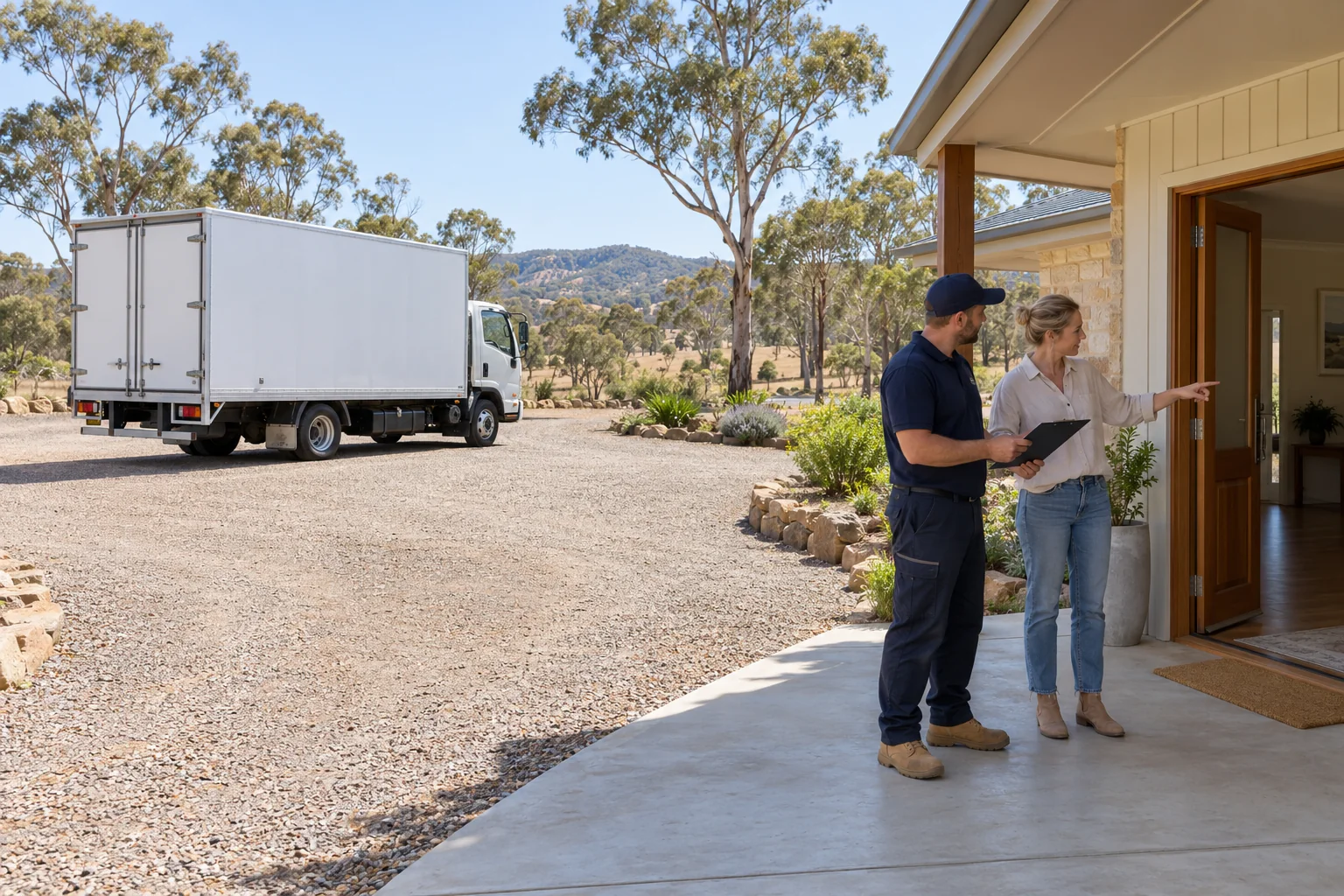
Keep the agreed space clear of parked vehicles, machinery and stored materials. Arrange gate access and manage pets or livestock so they stay away from the vehicle and handling route. Tell the office about operating equipment, site activity or scheduled deliveries that may share the space.
For a working farm, provide its visitor and vehicle-entry procedures in advance. Farm Biosecurity’s people, vehicles and equipment guidance supports designated access and parking arrangements. Identify any check-in, cleaning or restricted-area requirements so the proposed delivery can be assessed against them.
If you are considering a container, assess the delivery vehicle and placement equipment as well as the container footprint. The self-pack container access checklist covers the questions to settle before committing to that arrangement.
Turn a vague access concern into a useful enquiry
“The gate is wide, but the turn is tight”
Send a view showing the approach road, gate and corner together, plus the clear opening measurement. Explain any ditch or soft verge. The operator needs to assess the turn as well as the gap between posts.
“The truck can get in, but there is no turning space”
Show the proposed unloading area and full departure route. Ask for the access plan to include the exit before the vehicle enters. Do not leave a long or difficult reversing task as a surprise.
“We could receive the furniture in the shed”
Describe the shed access, floor, dryness, available space and who will attend. Clarify whether delivery ends there or includes later room placement. Moving furniture from the shed to the home is another task to agree, even when both are on the same property.
Give IRCO one current property-access summary
Combine the address, entrance directions, dated photos, measurements and outstanding questions with your furniture inventory. Name the person responsible for property access and the person receiving the load. Mark permissions or structural information that are still unconfirmed.
For a Queensland destination, use our Queensland removalist services alongside the property details. If leaving Brisbane for a regional address, the Brisbane to regional Queensland moving guide helps connect pickup preparation with the receiving arrangements.
Confirm the endpoint and any additional handling in the written quote. Read the IRCO booking terms and send changes promptly. A clear rural access summary helps Interstate Removalists Co respond to the move you actually need, right through to the final handover.
Prepare your rural property access enquiry
Fill in the details you know and mark anything uncertain as provisional. Build a summary, then copy it into your IRCO quote enquiry. This tool does not send a booking or confirm availability.
Rural removalist truck access and delivery questions
Can an interstate removal truck deliver directly to my rural house?
That depends on the actual vehicle, approach roads, private access, unloading space and exit. Send the property details with the inventory so IRCO can assess direct delivery. If access is unsuitable, ask about a separately agreed alternative receiving point, transfer or later delivery arrangement.
How wide does a gate need to be for a removal truck?
There is no single width that establishes access for every vehicle and property. Provide the clear opening, approach angle, posts, hardware and any narrow sections beyond it. The operator also needs room to turn and account for the actual vehicle’s dimensions and the surrounding ground.
How do I know whether a private bridge or cattle grid can take the truck?
Ask the owner for reliable information about the structure, its restrictions and any known damage. Give that evidence to the operator and establish whether further competent assessment is required. A photo, past delivery or estimate based on appearance cannot certify capacity for the proposed vehicle and load.
Can removalists use an unsealed driveway?
An unsealed driveway needs assessment of its surface, gradients, corners, drainage and current condition, together with the proposed truck. Explain areas that soften or become difficult after rain. Give dated photos and agree how changes will be reported before the vehicle attempts access.
Can furniture be transferred to a smaller vehicle for the final kilometres?
It may be an option after assessment. Confirm the transfer location, vehicle, capacity, labour, protection, timing and complete price with IRCO. Both transport stages must fit the plan. A smaller vehicle still needs suitable access and does not automatically resolve unsafe ground or a restricted crossing.
Is a map pin enough to find a rural delivery address?
Provide the full address and a pin at the intended vehicle entrance, plus written directions from a clear junction. Include the gate photo, property sign, any forks or alternate entrances and the receiving contact. Explain mobile reception gaps and arrange communication before the truck reaches them.
What happens if rain or flooding makes the property inaccessible?
Advise IRCO promptly and discuss the available revised timing, receiving location or holding arrangement and any associated charges. Follow official road restrictions and never attempt floodwater crossings. The condition of the private access needs checking separately, even if nearby public roads remain open.
Can a rural or remote move use backloading?
Suitable backloading may be assessed when the route, capacity, dates and property access fit the available service. Describe the complete final approach before comparing options. Ask how any extra handling or transfer affects the price and delivery window; shared truck space does not itself confirm property access.
What should a working farm tell the removalists before delivery?
Provide the approved entrance, visitor contact, designated route and parking area, gate arrangements and any vehicle-cleaning or check-in requirements. Explain livestock movements, operating machinery and restricted areas. These details need to be considered before the delivery arrangement is confirmed.
Is a container suitable for a rural property move?
Assess the delivery vehicle, placement equipment, working space, surface and exit as well as the container footprint. Explain both sites and the loading help you need. A space large enough to hold a container does not by itself establish that it can be delivered or collected there.
Will a long carry from the truck affect the rural removal quote?
It can affect the labour, time and equipment needed. State the distance to the house, surface changes, slopes, steps and intended rooms. Ask for the written scope to include the agreed unloading endpoint and carrying work, and identify any access details still to be confirmed.
Can my furniture be delivered to a shed instead of the house?
Discuss the shed’s access, condition, available space and authorised receiving person with IRCO before booking. Confirm whether delivery ends in the shed or includes another handling stage. Moving the goods into the house later needs its own agreed responsibility, timing and price where applicable.
Talk through your move with IRCO
Send the property summary with your rural and remote removal enquiry. For the full household transport scope, our interstate moving services help bring the goods, access and receiving arrangements into one conversation.
Request a quote from Interstate Removalists Co with the details you have, or call 0417 918 451. You can find more practical planning help in our interstate moving guides.