Partial packing for kitchens and fragile items
Happy to pack the clothes and linen, but less confident about the dinner set, wine glasses or family keepsakes? You can ask for packing help with the parts of your move that need more time and care.
This guide helps you prepare a clear partial-packing enquiry for Interstate Removalists Co, so everyone knows what you are packing, what needs professional attention and what must stay out until moving day.
Choose the packing help that would make the biggest difference
A kitchen can look almost finished while still holding dozens of individual packing jobs. There are the everyday plates, the awkward serving platter, a cupboard of glasses and the coffee machine you need tomorrow morning. Partial packing gives you a way to ask for help with those specific tasks while keeping control of the rest.
Start with a short list of what you would like someone else to prepare. That might be the whole kitchen, only the breakables, or selected fragile items from several rooms. Then ask IRCO to assess that list alongside your home moving service. The items, access, dates and available service determine the arrangement.
A useful first enquiry: “We will pack the bedrooms, linen and books. Please assess packing for the kitchen crockery, glassware and two display-cabinet shelves. We will keep a small everyday kitchen kit with us. Collection is from a first-floor unit, with lift access to confirm.”
This gives us something practical to discuss. “Some packing required” leaves too much open, particularly if the booking needs different cartons, a separate packing visit or preparation before the truck arrives.
Define the scope by cupboard and item, not just by room
Two kitchens of the same size can contain very different loads. Take an overview photograph, then open each selected cupboard or drawer for a clear contents photo. You do not need to spread every item across the floor. Number the photos and use those numbers in your list.
| Area or item | Help requested | Your preparation |
|---|---|---|
| Cupboard K1: everyday crockery | Pack the listed plates, bowls and mugs | Remove unwanted pieces; keep a small daily set aside |
| Cupboard K2: stemware | Assess suitable protection for each glass type | Give quantities and photos; identify crystal or damaged pieces |
| Pantry and cleaning cupboard | Confirm which goods are accepted before packing | Separate food, liquids and products needing a specific check |
| Benchtop appliances | Pack agreed appliances and their loose components | Complete model-specific cleaning, draining and drying |
| Display cabinet | Assess named ornaments, vases and keepsakes | Photograph condition and identify repairs or loose fittings |
Mark each entry as “packing requested”, “I will pack” or “stays with me”. Once the quote is agreed, update the first category to show the confirmed work. If two people in the household are organising the move, work from one shared list so a cupboard is neither missed nor assigned twice.
Sorting belongs before this handover. Our decluttering guide can help you decide what is leaving the household before time and materials are allocated to packing it.
Prepare the kitchen without creating another job for yourself
Leave the selected goods identifiable and accessible
Ask whether the packers prefer selected contents left in their cupboards. Emptying everything onto the benches can remove the working space they need. Wash and thoroughly dry the items, clear a sturdy preparation area and keep the route through the kitchen open. Point out high cupboards or shelves that require access equipment; do not balance on a chair to empty them.
Give crockery and glassware the right protection
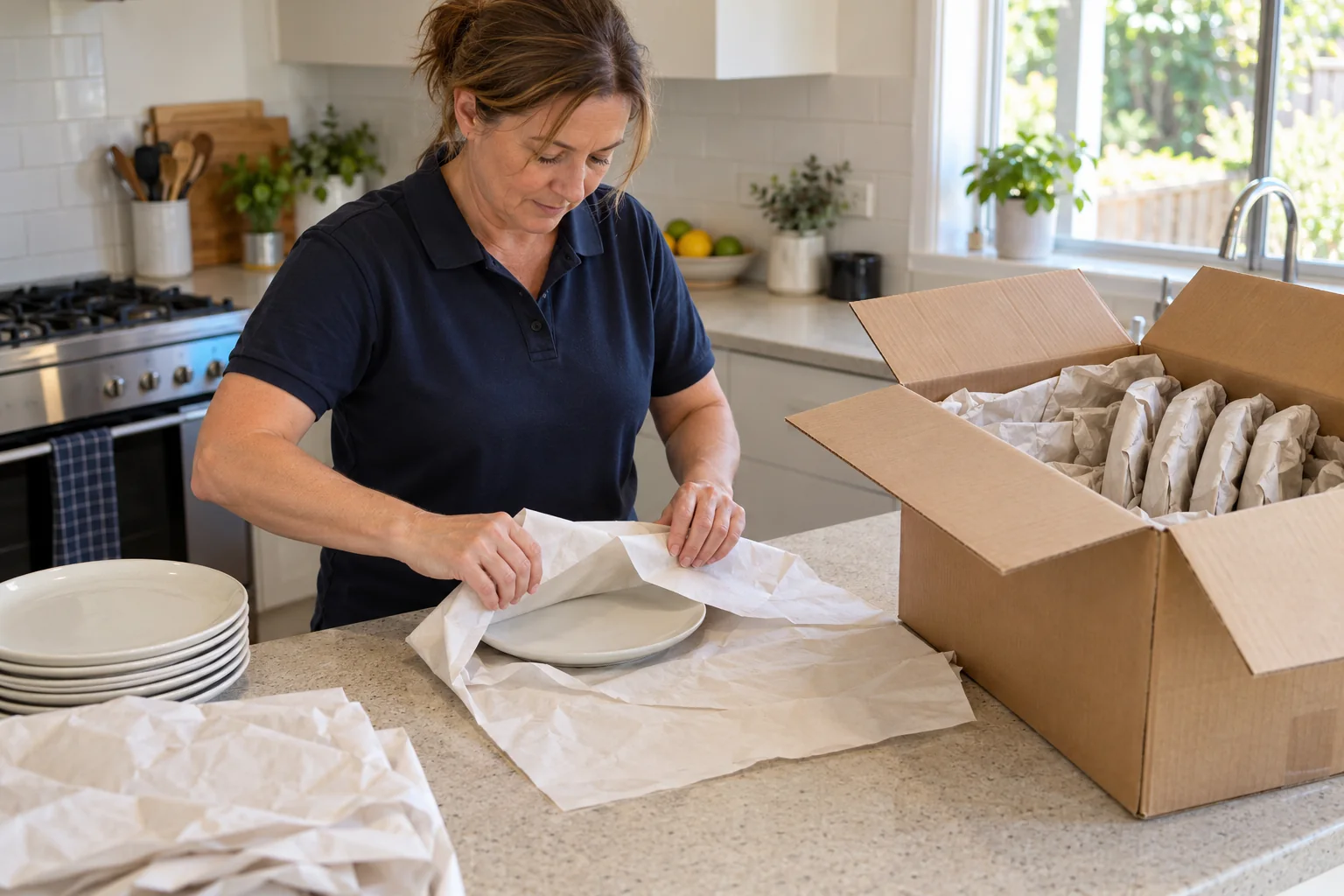
For ordinary dinnerware, use clean unprinted packing paper, sound cartons and a cushioned base. Wrap plates individually and stand them in supported rows on edge. Separate neighbouring pieces and fill gaps without forcing the contents tightly together. Glassware needs protection around vulnerable features; a divider should accommodate the wrapped glass without pressure on its rim or stem.
The packaging supplier’s dish and glass packing guidance explains how fitted compartments and individual protection work together. Follow the instructions for the actual system being used. Crystal, repaired china and unusually shaped pieces deserve their own assessment.
Separate dense cookware from delicate contents
A carton of cast-iron cookware has a different handling requirement from a carton of glassware. Tell the packer about heavy pans, stoneware and small appliances rather than filling spare spaces around delicate pieces with them. Carton size, construction and final weight need to suit both the contents and the people handling the package.
Use the box supplier’s load guidance and ask IRCO about the packing arrangement. There is no single carton weight that makes every lift suitable. Stop adding contents if the base, sides or closure are struggling; a fragile label will not correct an overloaded box.
Finish appliance preparation before wrapping starts
Give the model details for coffee machines, mixers and food processors. Identify glass bowls, removable reservoirs, loose attachments and cutting blades. Follow the manufacturer’s preparation instructions and tell the packer about any remaining water, loose parts or known faults. Do not leave sharp accessories loose in a general kitchen carton.
Large appliances need separate preparation. Our whitegoods moving checklist covers the draining, drying and transport-part questions for fridges, washing machines and dryers. Protective packing is only one part of getting them ready.
List fragile items that need more than ordinary kitchen packing
Walk through the dining room, living room and hallway as well as the kitchen. A glass display shelf, a tall vase and a porcelain figurine each need different information. Record dimensions where relevant, photograph the whole piece and include close-ups of handles, thin projections, repaired joints or existing chips.
Tell us if an item has particular sentimental or replacement value. That helps identify where a specialist packing assessment may be appropriate; it is not an agreement about insurance or compensation. Avoid hiding a repaired piece inside an otherwise ordinary carton without mentioning its condition.
FedEx’s breakables guidance reinforces the importance of a suitable outer box, individual protection and controlled movement inside the package. Its parcel-shipping specifications are not a universal recipe for a household removal. The packing method still needs to suit the object, materials and intended handling.
For large flat items, use our separate TV and mirror replacement-packaging guide. A television, framed mirror or glass wardrobe component should be named on the inventory, rather than counted as another small box of fragile goods.
Keep the kitchen usable until the agreed packing time
Choose the last point at which you need to cook, wash up or make breakfast in the old home. Work backwards from the agreed packing and collection arrangements. The crew needs clean, dry items ready for the booked work; freshly washed dishes on a draining rack are still unfinished preparation.
- Before the packing visit: finish sorting, send updated photos and confirm the selected cupboards, access and materials.
- Before packing begins: put your travelling essentials in a separate, clearly marked area. Show the packer what is excluded.
- At handover: walk through the list together, identify unusual pieces and agree who can approve extra work.
- Before collection: check that owner-packed goods are complete and any changes have reached the office.
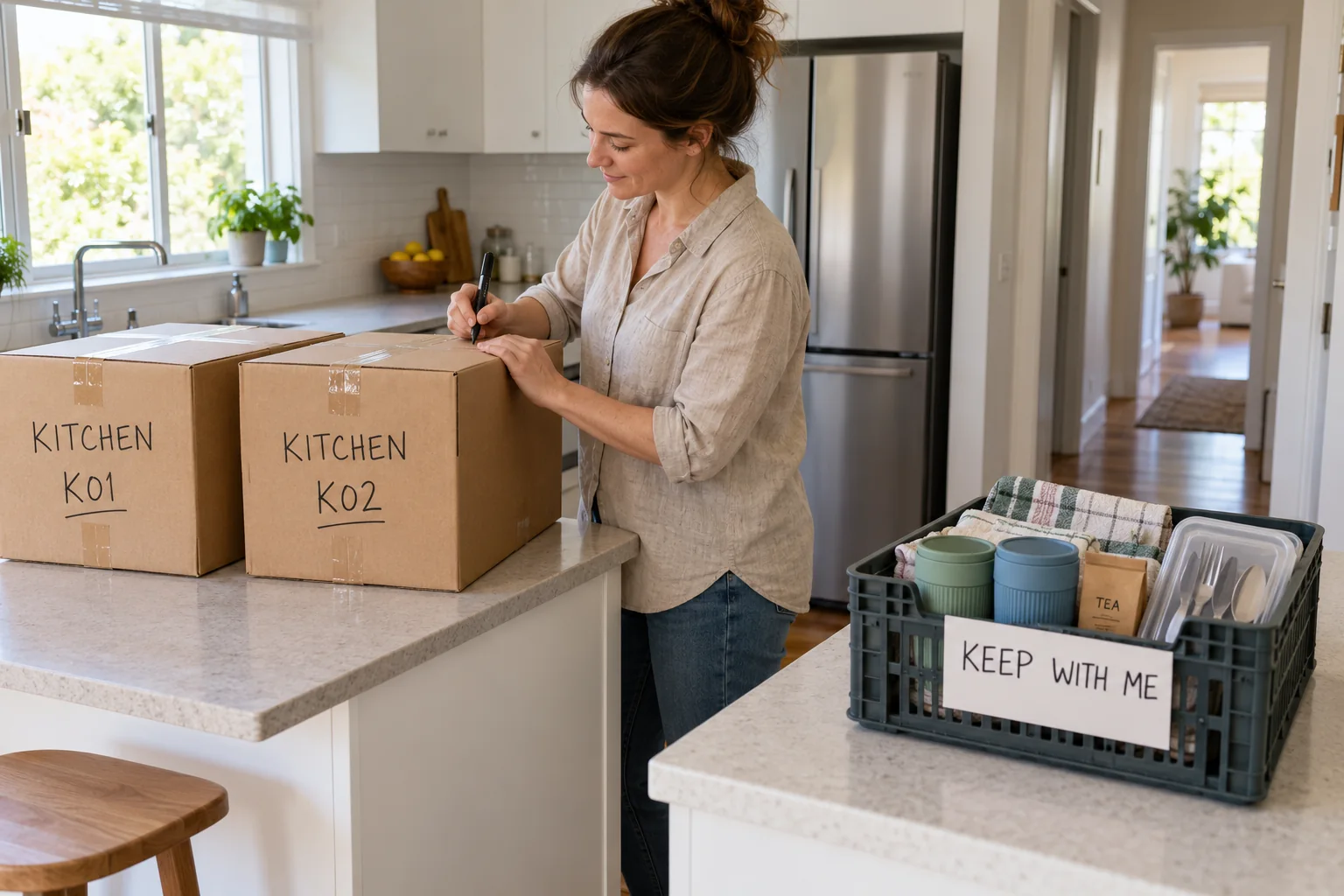
Your everyday kit could include a couple of cups, a small amount of cutlery, tea towels and the items needed for a simple meal. Size it for the period you expect to be without the main load. If it travels with you, give it a different label from cartons that belong on the truck.
Food and household products need a separate decision. Do not assume pantry contents, liquids or cleaning chemicals are accepted because the kitchen is being packed. Check the current moving terms and ask about uncertain items before the visit. Keep goods that are not travelling out of the packing area.
Make the cartons easy to identify at both homes
Use a room name and a unique carton number, such as “Kitchen K01 — everyday crockery”. Keep a separate inventory showing the main contents, who packed the carton and any relevant item photographs. Put suitable handling labels on the outside without treating them as a substitute for protection.
Identify your own cartons clearly, particularly when they sit beside professionally packed ones. If you want any owner-packed carton checked or repacked, ask before collection and confirm the additional work. Sealing a carton does not mean someone has inspected what is inside it.
For example, your inventory might record K01–K04 as kitchen packing included in the booking, K05 as your own utensils carton, and E01 as the essentials crate staying with you. The exact numbers do not matter. A consistent system makes a missing carton or an unexpected extra one easier to discuss.
At delivery, match the cartons to the list and direct them to a clear, dry kitchen area. Unwrap one item at a time over a suitable surface and check the paper before discarding it; small lids and fittings can disappear into used wrapping. Photograph and report any concerns promptly, retaining the relevant packaging while they are assessed.
If you need help after delivery, specify what unpacking means for your household. Opening boxes, setting contents on a bench, putting cupboards into use and removing packaging are separate tasks. For a timing gap between homes, include the packing plan in your interstate storage arrangements.
Compare the complete partial-packing quote
The useful comparison is the total for the agreed work. Ask whether the price covers packing labour, materials, any separate attendance, special packaging and the effect on the transport inventory. Confirm how additions are approved and charged. Avoid estimating the saving from a carton count alone.
Check the tasks still assigned to you: sorting, washing, appliance preparation, owner packing and keeping access clear. If time is getting tight, tell the office early and ask which remaining tasks can be assessed. A timely update is much easier to plan around than an unfinished kitchen discovered at collection.
Our professional packing services can be discussed as part of your move, with the scope focused on where you need assistance. For the cartons you choose to prepare yourself, use the wider packing tips and recommendations alongside the item-specific guidance above.
Prepare your partial-packing enquiry
Fill in the details you know and mark anything uncertain as provisional. Build a summary, then copy it into your IRCO quote enquiry. This tool does not send a booking or confirm availability.
Kitchen and fragile-item packing questions
Can I book packing help for just the kitchen?
Ask IRCO to assess the kitchen as a defined part of your interstate move. List the cupboards, drawers, pantry goods and appliances you want included, together with anything you will pack yourself. Confirm availability, materials, timing and the agreed tasks in writing before treating the kitchen packing as booked.
What is the difference between partial packing and full packing?
Partial packing covers selected rooms, cupboards or items while you prepare the remaining goods. Full packing has a broader agreed scope. Neither description automatically includes sorting unwanted belongings, preparing appliances, dismantling furniture, unpacking or removing packaging; ask for each required task to be listed in the quote.
Is partial packing cheaper than having the whole house packed?
It may reduce the work you ask the packers to do, but the total depends on labour, materials, access, minimum charges and the items selected. Compare written quotes for the same move and scope. A smaller list does not establish a fixed saving or a guaranteed lower total.
Should I empty cupboards before the packers arrive?
Agree this when booking. Keeping selected cupboard contents in place can make the scope easier to identify and avoid crowding the benches. Remove unwanted items, wash and dry the goods being packed, and provide clear access. Follow any different preparation instructions given for your particular booking.
Can I pack clothes and books while the removalists pack fragile items?
You can request that division of work. Give IRCO a list of the fragile items and clearly distinguish your completed cartons from goods awaiting packing. Record who packed each carton on your inventory, and tell the office about any unfinished owner-packing tasks before the scheduled visit.
How should plates and wine glasses be packed for moving?
Use suitable cartons, individual protection and cushioning that prevents pieces touching or moving. Ordinary plates are generally packed in supported rows on edge. Glass dividers must fit the wrapped items without forcing delicate stems or rims. Follow the packing-system instructions and ask for assessment of crystal, repaired pieces or unusually shaped items.
Are packing boxes and materials included in a partial-packing quote?
Check the written quote. Ask whether cartons, paper, protective inserts, tape and any specialist packaging are supplied and how they are charged. If you provide materials, have their suitability confirmed. Also establish whether extra materials or additional items need approval before the work proceeds.
Can removalists pack a coffee machine or food processor?
List the appliance and request the packing help you need. Complete its manufacturer’s preparation, including any draining, cleaning, drying or securing of removable parts. Identify blades and glass components. Packing assistance does not automatically include disconnecting plumbing, electrical work or appliance servicing.
What should I keep out of the kitchen packing?
Set aside the items you need during travel and before delivery, such as everyday cups, a small amount of cutlery and tea towels. Keep them clearly separate from the removal load. Discuss food, liquids, cleaning products and any restricted goods with IRCO instead of leaving them mixed into cupboards for automatic packing.
Does professional packing automatically insure my fragile items?
Do not assume packing includes insurance. Read the current service terms and ask what the quote covers. For any separate transit cover, ask the insurer about owner-packed goods, professionally packed goods, fragile items and storage. Keep your packing inventory and condition photographs with the booking records.
Can partial packing and unpacking be arranged together?
Ask about both tasks when enquiring, including the receiving address and dates. Specify whether you want cartons opened, selected contents placed on a bench, cupboards put into use or packaging removed. These are different tasks, and their availability and price need to be confirmed separately.
What if I have more fragile items than I first listed?
Send an updated list and photographs as soon as you notice the change. Ask how the extra goods affect materials, packing time, transport volume and the price. Avoid adding unlisted cupboards or leaving half-packed boxes for the crew to resolve without an agreed change to the scope.
Talk through your move with IRCO
Bring your selected-item list to our packing services team, then connect the agreed preparation with your interstate home move. We can discuss the tasks that would help most and clarify the scope before you book.
Request a quote from Interstate Removalists Co with the details you have, or call 0417 918 451. You can find more practical planning help in our interstate moving guides.