Moving whitegoods interstate: prepare your fridge, washing machine and dryer
Your fridge and laundry appliances need a little planning before moving day. A dry interior, the right transport parts and clear access can make a real difference at collection and when you settle into the new home.
Use this guide to prepare your appliances, identify the help you need and give Interstate Removalists Co a clear picture of the move.

Start with the model number, not a one-size-fits-all checklist
A fridge can look ready because it is empty. A washing machine can look ready because the hoses are disconnected. Neither tells the removalists whether the appliance has been prepared for transport.
Before your interstate move, photograph each appliance’s model label and find its moving or installation instructions. Those instructions settle the details that generic advice cannot: transport fixings, permitted orientation, draining and any waiting period before restarting.
Send Interstate Removalists Co a separate inventory line for every fridge, freezer, washing machine, dryer and dishwasher. Include appliances in the garage or laundry cupboard. For a full household, add that list to your interstate moving enquiry; for a fridge and a few other pieces, our small interstate removals guide explains how to describe the load.
What needs to be ready for each appliance?
| Appliance | Preparation to organise | Confirm before the move |
|---|---|---|
| Fridge or freezer | Remove contents; complete any required defrosting; clean and dry; secure or separately protect removable parts. | Model instructions for transport and restart; water connection; full dimensions and access. |
| Front-loading washing machine | Arrange disconnection, drain residual water as instructed, dry and fit the specified transport restraints. | Correct transit kit, who fits it and who removes it before the first wash. |
| Top-loading washing machine | Follow its own draining and tub-restraint instructions; protect hoses and cable. | Whether this model needs a transport support or another preparation method. Front-loader instructions may not apply. |
| Dryer | Identify the dryer type; arrange any unstacking; empty a collection tank if fitted and prepare it under the manual. | Transport orientation, vent or drain connection, stacking kit and delivery setup. |
| Dishwasher or integrated appliance | Plan disconnection and removal from cabinetry; follow the model’s draining and transport instructions. | Who handles plumbing, electrical connections, cabinetry and reinstatement. |
Make the responsibility explicit. “Appliances included” in an inventory describes the goods to be moved; it does not tell anyone who is disconnecting the water, removing a stacked dryer or reconnecting equipment.
Preparing a fridge or freezer for interstate transport
Work backwards from the collection window
Plan when you will stop using the appliance, where the food will go and how long its preparation needs. A freezer still thawing when the truck arrives is a different collection from a clean, dry appliance. Leave time to deal with meltwater and check that the interior is dry before transport protection goes on.
Remove food and drinks. Follow the manual for defrosting and cleaning; do not use a sharp tool to prise ice away. Check drawers, shelves and door bins individually. Pack removable glass securely if it is travelling separately, label it with the fridge’s inventory number and include that package in the load list.
Beko’s refrigerator moving guidance covers preparation and recommends upright transport. Use the instructions for your own model to settle the permitted orientation and restart procedure.
A plumbed fridge needs another appointment in the plan
Tell the office if the fridge has a water dispenser or ice maker connected to the property. Arrange appropriate disconnection and preparation of the water line before collection. Keep any loose fittings identified and protected. If access appears to require removing doors, send photos and the model details for assessment before anyone starts dismantling it.
There is no universal “switch it on after X hours” rule
Record the manufacturer’s waiting instructions and keep them accessible at the destination. If the appliance has been tilted or laid down, ask how it travelled and check the applicable instructions before switching it on. Once running, allow it to reach the required operating condition before putting food back. An assumed restart time can turn an otherwise organised move into an avoidable problem.
Moving a washing machine: water and transit fixings need separate checks
Book the last wash early enough to complete preparation. Water can remain in hoses and parts of the machine after a cycle, so an empty drum does not mean everything is drained. Use the model’s draining instructions and arrange help if a connection is seized, inaccessible or unfamiliar.
The Beko washing-machine moving guide explains the need to disconnect power and water, manage residual water and dry the appliance. Keep disconnected hoses and the power lead protected without stretching them, trapping them under the machine or leaving fittings loose against the finish.
Find the correct transport kit before collection day
Many front loaders use transit bolts or other restraints to protect the suspended drum during transport. The kit and fitting method must match the machine. A bag of bolts from another washer is not a reliable substitute.
Bosch’s washing-machine installation guidance explains refitting transit bolts for a future move and removing them before operation. Check your own manual for the number, parts and procedure. If anything is missing, contact the manufacturer or an appropriate appliance service provider with the model number before booking the preparation work.
Do not improvise with hardware that merely fits the holes, or assume padding inside the drum replaces the specified restraint. For a top loader or washer-dryer, check that model separately. If you cannot confirm it is ready, tell IRCO before collection so the next step can be agreed.
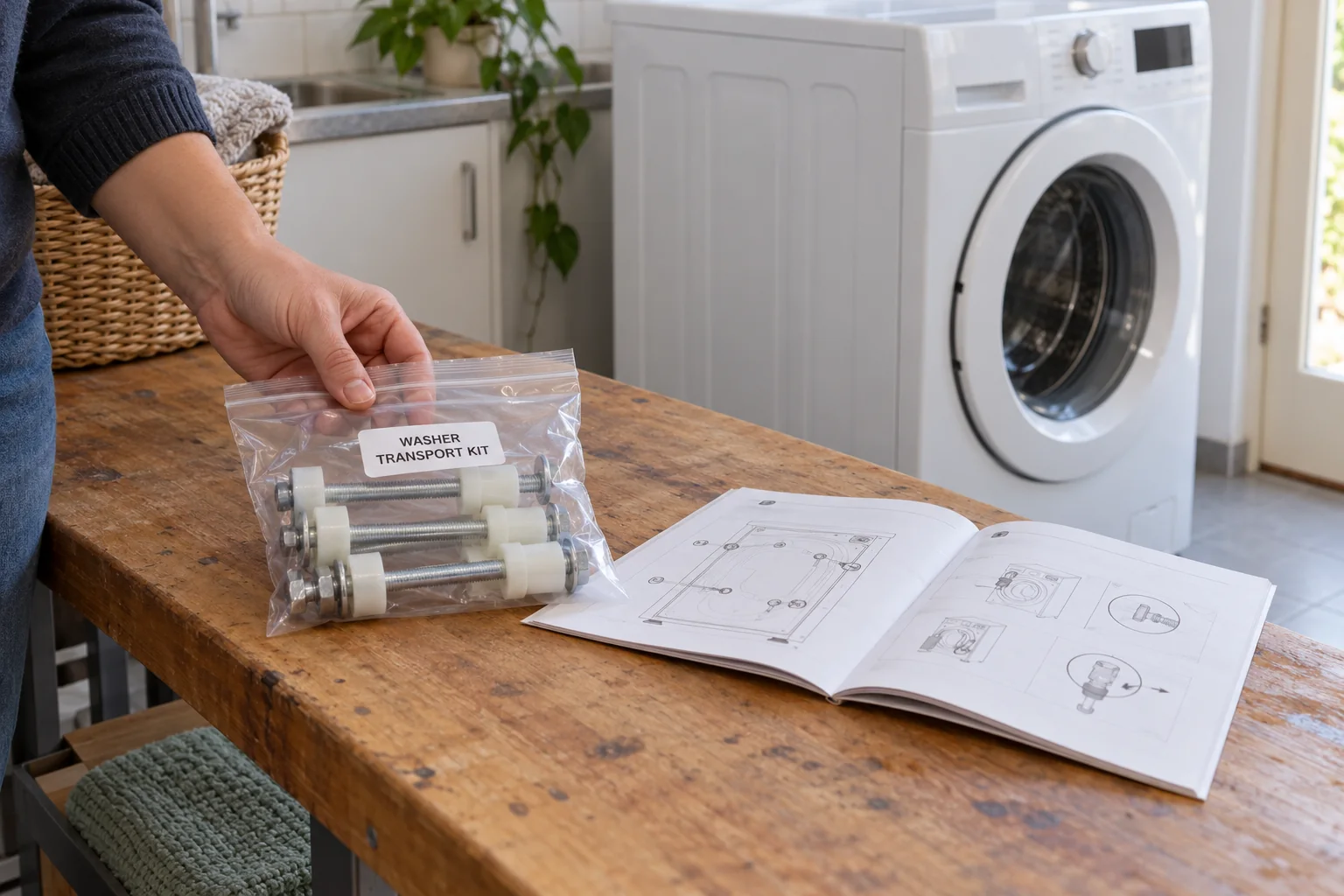
Keep a simple handover note with the appliance: model, transport parts fitted, any preparation still outstanding and where the manual is saved. At delivery, the person installing it needs to know what must be removed before use.
Dryers, stacked laundries and built-in appliances
Describe the actual setup when enquiring: a freestanding vented dryer, a heat-pump dryer on a washer, a wall-mounted appliance or an integrated unit behind a cabinet door. These are different preparation jobs even when the inventory simply says “dryer”.
For a stacked laundry, provide photos of the stack and connecting kit. Agree who will separate the appliances and whether the existing kit suits the intended setup at the new home. Keep the kit’s parts together and labelled. Do not assume the dryer can travel attached to the washer.
Beko’s tumble-dryer transport guidance covers emptying a collection tank where fitted, drying the appliance and dealing with the drain or vent connection. Check your model’s additional handling and restart instructions, particularly for heat-pump equipment.
For dishwashers and integrated appliances, organise release from the cabinetry as well as disconnection. Electrical, gas or plumbing work may need an appropriately qualified tradesperson. Tell IRCO what has been arranged and what help you are requesting; have any additional work expressly agreed before the move.
Measure the appliance and the whole route to its new position
Measure height, width and depth, including handles and projections. Supply the manufacturer’s weight if you have it; label an estimate as an estimate. Then describe the path from the current room to the vehicle and from the delivery vehicle into the new home.
- Doorways and turns: give clear openings, tight corners and corridor photos. One wide front door does not resolve a narrow laundry entrance.
- Stairs and lifts: include steps, landings, lift door and cabin measurements, bookings and any building restrictions.
- Vehicle access: show parking, slopes, surfaces and the carrying distance. Flag a basement or loading bay with height limits.
- The final space: check the recess, door swing, connections and the manufacturer’s required clearances at the destination.
For example, a fridge may fit the new kitchen recess but be unable to turn through the hallway in its permitted handling position. Share that constraint before accepting the quote. IRCO can assess the furniture and whitegoods transport requirements with the complete access information.
Keep the route clear on the day and leave heavy lifting and loading to the agreed team. Protective blankets do not solve an unsuitable access path. If you need help protecting loose shelves, panels or other fragile parts, include them when discussing packing and protection services.
For the kitchen contents travelling with those appliances, our kitchen and fragile-item partial-packing guide helps you agree the packing scope and separate your own cartons from goods requiring help. List loose glass shelves and other delicate appliance parts individually.
Three checks that make collection and delivery easier
1. Before collection
Confirm each appliance is empty, prepared under its manual and accessible. Identify loose parts, existing marks and any task still unfinished. Have the agreed preparation and handling scope available.
2. At handover
Match every appliance and accessory package to the inventory. Tell the crew about transport fixings, handling restrictions and water connections. Keep manuals and restart notes with you.
3. Before first use
Check condition and placement, follow the restart instructions and arrange the agreed installation. Remove transport restraints where required, level the appliance as instructed and check connections before use.
If delivery falls between property handovers, explain that early. An appliance needing storage has a different schedule from one going straight into a working laundry. Agree the clean, dry storage preparation and later delivery through the interstate storage planning process.
For a household move, keep a short “first days” plan: essential laundry, access to a working fridge and who is attending the installation. The truck’s delivery window and the time an appliance is ready to use are separate pieces of that plan.
What helps IRCO give you a useful whitegoods moving quote?
Send the model list, dimensions, photos, addresses, access details and date ranges together. Describe whether the appliances are travelling alone or with the rest of your home. Flag integrated units, heavy models, tight stairs and any preparation you cannot complete yourself.
Ask for the scope to identify transport, protection, placement and any extra assistance. Do not assume disconnection, reconnection, door removal or unstacking is included simply because the appliance appears on the inventory. IRCO’s booking terms require requested assembly or dismantling work to be raised at booking, with additional charges applying.
You do not need every answer before contacting us. Send what you know, mark what is still being checked and let the office review the practical details with you.
Prepare your whitegoods moving enquiry
Fill in the details you know and mark anything uncertain as provisional. Build a summary, then copy it into your IRCO quote enquiry. This tool does not send a booking or confirm availability.
Whitegoods moving questions
Can removalists move a fridge and washing machine interstate?
Include each appliance in your enquiry with its model, dimensions, condition and access details. IRCO can assess the transport alongside your furniture or as a smaller load. Confirm preparation, protection and placement, and identify any disconnection or installation work separately before booking.
How long before moving should I unplug my fridge or freezer?
Work back from collection using the model’s defrosting and preparation instructions. Allow enough time to remove contents, manage meltwater, clean and dry the appliance. There is no single preparation period that suits every fridge and freezer, so check the manual before planning the last day of use.
Can a fridge be transported lying down?
Upright transport is preferable where required or recommended by the manufacturer. Whether another position is permitted, which side and what restart procedure applies depend on the model. Give the removalists the instructions and access constraints before collection rather than assuming every fridge can travel on its side.
How long should I wait before switching on a fridge after moving?
Follow the instructions for your model and how it travelled. If it was tilted or laid down, confirm the applicable waiting period with the manufacturer’s guidance before switching it on. Allow it to reach its required operating condition before returning food; a universal four-hour or 24-hour rule is not reliable for every model.
Does a washing machine need to be drained before transport?
Prepare it under the manufacturer’s moving instructions, including residual water in hoses and the relevant parts of the machine. An empty drum does not prove it is drained. Arrange appropriate disconnection, allow it to dry and keep hoses, cables and fittings protected for collection.
What if I have lost my washing-machine transit bolts?
Contact the manufacturer or an appropriate appliance service provider with the exact model number to identify the correct replacement kit and fitting procedure. Do this before collection. Do not substitute unrelated bolts or assume internal padding replaces the specified transport restraints; tell IRCO if preparation is still unresolved.
Do all washing machines use the same transport bolts?
No. The transport restraints, number of parts and fitting method vary. Many front loaders use transit bolts, while top loaders and other designs may have different requirements. Use the instructions and parts for the actual model, and ensure any transport restraints are removed as required before operation.
Can my dryer travel stacked on top of the washing machine?
Do not assume it can. Send photos of the appliances and stacking kit and agree who will separate them under the manufacturer’s instructions. Keep the kit’s parts identified and confirm the destination setup. Unstacking, transport and reinstalling the stack are separate tasks to discuss at booking.
Will removalists disconnect and reconnect my appliances?
Only rely on work expressly included in your agreed scope. Identify water connections, integrated units, wall mounting and electrical or gas work when enquiring. Some tasks need an appropriately qualified tradesperson. Arrange the preparation before collection and installation at delivery, rather than assuming they come with transport.
How do I prepare an integrated dishwasher for moving?
Identify the model, how it is attached to the cabinetry and its utility connections. Arrange suitable disconnection and release, then follow its draining and transport instructions. Tell IRCO about cabinet panels, loose parts and any work that remains outstanding. Do not force the appliance out while connections or fixings remain attached.
Can whitegoods go into storage between homes?
Discuss the appliances and storage period before booking. Complete the model’s clean, dry preparation and agree the storage conditions, handling and later delivery. Keep installation and restart instructions available for the eventual destination. Explain if you need access to anything while the household goods are stored.
What information does IRCO need to quote for moving whitegoods?
Send an itemised appliance list, makes and models, dimensions, known weights, photos, pickup and delivery addresses, access and date ranges. State what preparation you will complete and what help you need. Include stairs, tight doorways, stacking kits, integrated appliances and water connections.
Talk through your move with IRCO
Discuss the full inventory through our interstate moving services, or explore household removals when the appliances are part of a complete home move. For selected items, our furniture transport service is a useful starting point.
Request a quote from Interstate Removalists Co with the details you have, or call 0417 918 451. You can find more practical planning help in our interstate moving guides.