Moving furniture in a Brisbane high-set home or Queenslander
Moving from a high-set home, or bringing your furniture into a Queenslander? A clear plan for the stairs, upper rooms and under-house storage makes the booking much easier to organise.
Use this guide to prepare the access details that help Interstate Removalists Co assess your household move, from the truck position to the room where each piece belongs.
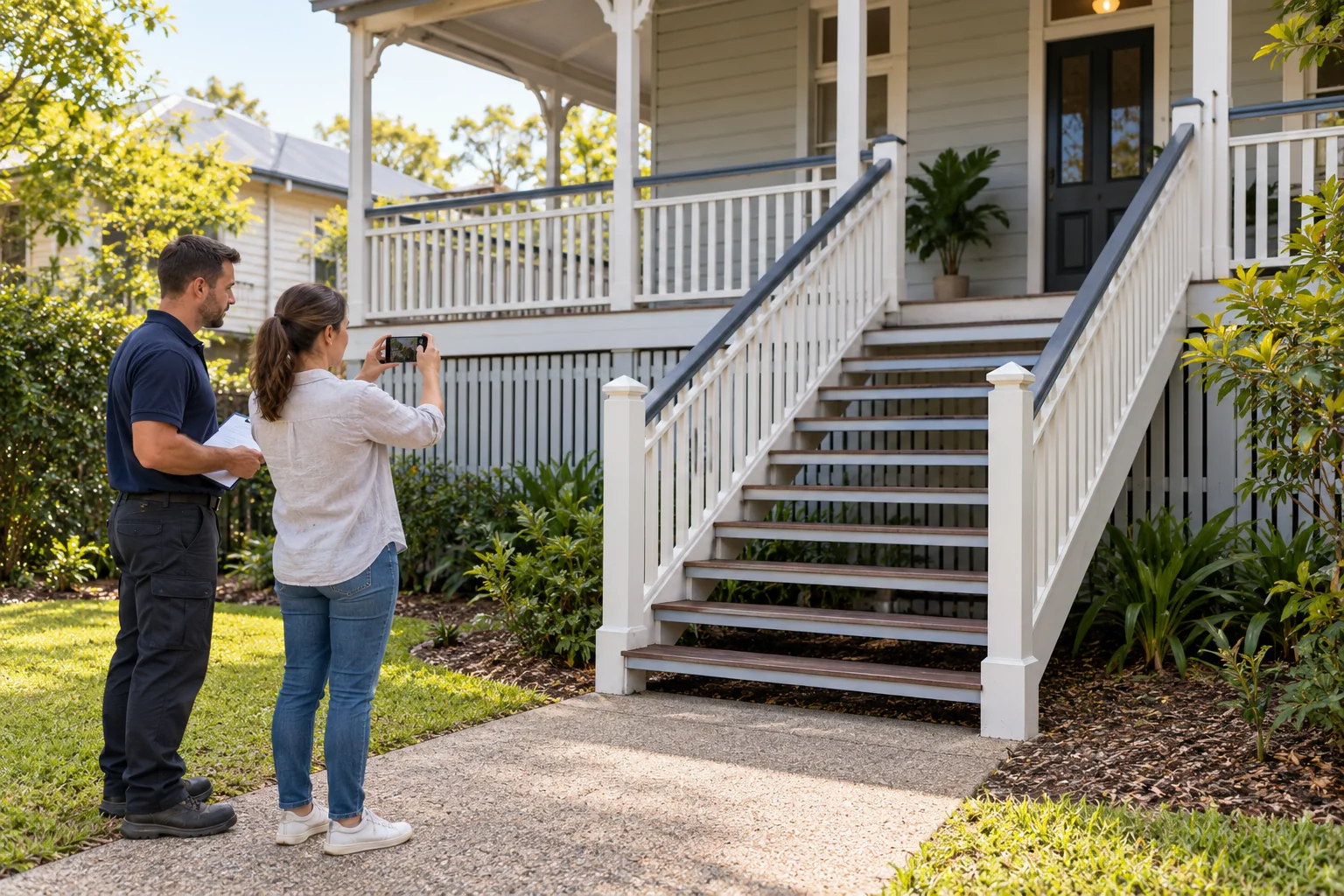
Plan the furniture route through each level of the home
The front stairs are often the first thing people mention when moving a Queenslander. The harder question can be what happens at the top: a short landing, a screen door that opens into the turning space, then a bedroom entrance just beyond the hall.
Give our Brisbane interstate removalists a picture of that complete route. This guide covers household furniture and belongings in high-set homes, raised Queenslanders and similar properties. It helps you prepare for collection from Brisbane or delivery into a Brisbane home after an interstate move.
Start with three lists: furniture on the upper level, goods at ground level or under the house, and items needing individual access assessment. Add the usable entrance for each group. A bedroom count cannot show how many separate carrying routes the move involves.
Interstate Removalists Co can use these details to assess the load, preparation and access together. You do not need to solve every awkward item yourself; identify it early, supply clear information and ask what arrangement can be included in the quote.
Record the staircase, landing and doorway together
Photograph the stairs from the bottom and top while standing safely still. Take an additional view from the side where practical, showing the landing and entrance. Include the point where furniture would leave the ground-level path and approach the first step.
| Part of the route | What to record | Why it matters |
|---|---|---|
| Stair flight | Step count, clear width between rails, straight or turning configuration and visible condition | The office needs to assess the actual carrying task and suitable handling arrangement |
| Top and intermediate landings | Clear length and width, changes of direction, overhead space and obstructions | A long item may reach the top but have insufficient room to turn towards the door |
| Door and screen door | Usable opening with doors open, swing direction, threshold and nearby fittings | The available passage can be smaller than the outside frame suggests |
| Veranda and internal route | Narrow points, room entrances, ceiling fittings and any additional steps | The furniture still needs a workable path from the entrance to its room |
| Ground-level approach | Distance from the proposed truck position, surface, slope, gates and isolated steps | The approach determines how the goods reach the stairs and where preparation can occur |
| Alternative entrance | The same details for the rear stairs or side entry, including permission to use that route | A wider rear staircase may still involve a difficult path around the house |
Use the same units throughout and mark any estimate. Record the furniture’s dimensions separately; neither a stair width nor a doorway diagonal proves that a particular item can be moved through. The team also needs room to control and protect it.
Tell IRCO about loose treads, damaged rails or other concerns before the appointment. WorkSafe Queensland’s stair safety guidance highlights clear routes, sound surfaces and lighting. Arrange suitable attention to defects rather than covering them with a runner or leaving the crew to discover them during loading.
Separate upstairs, downstairs and under-house storage
Use room names that another person can follow. “Bedroom 1 upstairs, front left” is clearer than “our room”. For a high-set home with a separate lower entrance, identify that entrance on the inventory rather than assuming every item passes through the same door.
- Upper living level: list sofas, dining furniture, beds, wardrobes, appliances and cartons by room.
- Ground-level rooms: identify any bedrooms, study or laundry that have their own access.
- Under-house storage: include shelving contents, workbenches, boxed belongings, outdoor settings and goods behind parked vehicles.
- Separate areas: add the garden shed, detached garage or rear studio with its own path and locks.
Low beams and tight bays under a Queenslander deserve photographs too. A bulky cabinet may need a different preparation plan from the cartons beside it. Tell the office if stored goods have deteriorated, become damp or cannot be inspected until other belongings are moved.
At the new home, label each item for its destination floor and room. Match detachable parts and fittings to the furniture item number. If a bed is going upstairs but its drawers are labelled only “bedroom”, the room allocation is still incomplete.
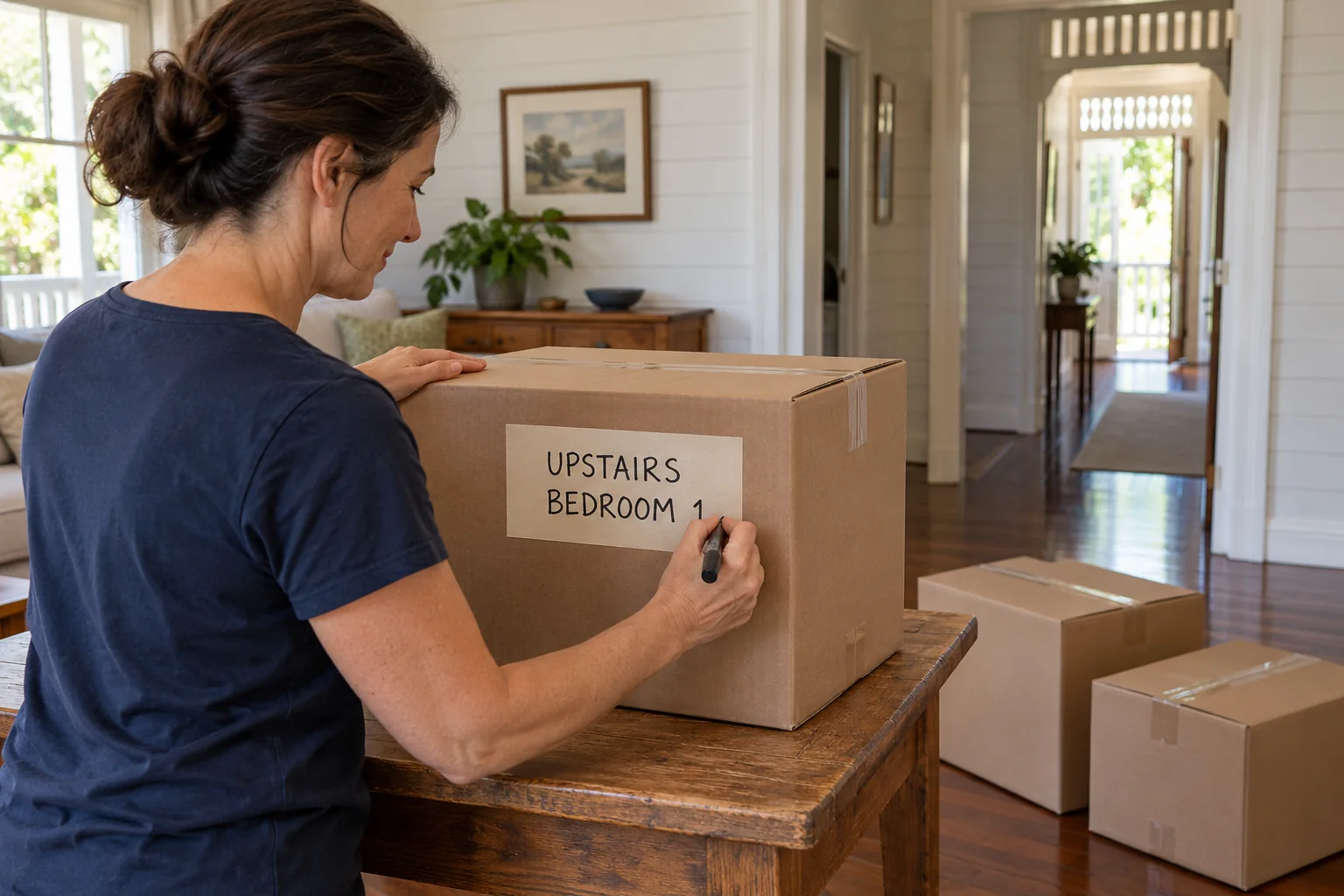
For a whole household, our home removal service provides the broader enquiry point. Include all levels in one inventory so the transport space and handling are assessed together.
Assess the pieces that could change the moving plan
Begin with the items that are rigid, heavy, unusually long or difficult to grip. A sofa that once entered the house may now face an enclosed veranda, different doorway or renovated landing. Explain what has changed since it arrived.
Fridges and laundry appliances
Give the make, model, dimensions and known weight, together with the destination level. Explain water connections, stacking or an integrated installation. Follow our whitegoods preparation guide for model-specific draining, drying and transport parts. Do not start moving an appliance towards the stairs before the handling method is agreed.
Beds, wardrobes and large tables
Find the product instructions and identify designed-to-remove components. Our flat-pack furniture moving guide explains how condition and construction affect dismantling. Request dismantling and reassembly at booking, and identify any wall attachments separately.
Sofas, stone tops, pianos and other awkward pieces
Send individual photos and dimensions. Describe fixed backs, recliner mechanisms, fragile finishes or existing repairs. Ask what further assessment is needed where ordinary access is uncertain; a general statement that the house has “wide stairs” is not enough for every item.
WorkSafe Queensland’s manual-task guidance considers force, posture and other task risks. A move needs suitable planning and equipment, not a customer-supplied promise to help lift. Discuss the item with IRCO rather than improvising a stair carry, balcony lift or ramp.
Connect the stairs to a workable truck position
A steep driveway can bring a car close to the house while remaining unsuitable for the proposed removal truck. Show the transition from road to driveway, the slope, turning space and overhead obstructions. Include the distance from a lawful street position if the vehicle may need to remain outside.
Photograph the relevant parking signs and explain the moving window. Within Brisbane City Council’s area, its commercial and heavy-vehicle parking guidance distinguishes loading-zone rules from heavy-vehicle residential parking restrictions. It lists an exemption for delivering or collecting goods from the latter restriction; that is not permission to ignore other signs or obstruct access.
Confirm the arrangement for the actual address and vehicle with the office and relevant authority. Homes in other South East Queensland council areas need their own local checks. Avoid treating a neighbour’s past moving arrangement as approval for your date.
Ask whether the front or rear route offers the better overall access. Compare the carrying distance, ground surface, stairs and landing together. A rear entrance with fewer steps can still involve a narrow side passage or a steep grass slope.
Prepare the house without filling the carrying route
Keep packing activity inside suitable rooms and leave the stairs, landings and route to the truck clear. Avoid making a pile at the top of the stairs “ready to go”. The crew needs that space to approach, turn and organise the next item.
Discuss protection for polished timber, door frames and delicate surfaces before moving day. Any covering needs to suit the surface and remain secure without hiding stair edges or creating a loose fold. Tell the office about recently finished floors and any restrictions on tapes or coverings.
For external stairs, consider the weather as well as the furniture. Wet surfaces, poor light or a storm can change what is practical. Keep packed goods in a dry room until the crew is ready, and advise the office if access conditions change. Do not move cartons onto an exposed veranda simply to clear the living room.
Have an authorised person available with the keys, inventory and room plan. Keep household members and pets clear of the active route. The person directing placement should know which items belong upstairs before unloading begins.
Three Queenslander access questions to resolve early
The fridge fits the door, but the landing is short
Provide photos and measurements of the stair-to-door turn, together with the appliance model. Ask IRCO to assess that transition before assuming the front staircase works. A different entrance or handling arrangement may need consideration.
There are two staircases, but only one reaches the loading side
Describe the connection around the house. Include side gates, steps, vegetation, surface and carrying distance. Compare the whole route rather than selecting the stairs with the fewest treads.
Most cartons are downstairs, but the heavy furniture is upstairs
Keep those groups distinct in the quote inventory. The load may be compact, yet still need significant stair handling. Floor allocation helps explain the work more accurately than describing everything as a small move.
Agree the stair work and room placement before booking
Use the enquiry below to put your inventory, access and requested help in one place. Ask IRCO to identify the agreed collection and delivery tasks, including stair handling, long carries, packing, dismantling and reassembly where requested.
Check the IRCO terms and conditions and use our removalist quote comparison guide when reviewing the written scope. Flag unfinished measurements, uncertain access and any unusually heavy item. Send changes before the move so the office can reassess the arrangement.
If your furniture will be delivered into a Brisbane high-set home, confirm the key date and destination rooms before choosing the receiving window. Ask about storage or another agreed plan if the home is not ready. The arrival of the interstate load and access to the upper floor need to fit the same booking.
Prepare your Brisbane high-set home moving enquiry
Fill in the details you know and mark anything uncertain as provisional. Build a summary, then copy it into your IRCO quote enquiry. This tool does not send a booking or confirm availability.
Brisbane high-set home and Queenslander moving questions
Can IRCO assess a move from a Brisbane high-set home or Queenslander?
Yes. Send the household inventory, floor allocation, stairs, landings, entrances and proposed truck position. IRCO can assess the furniture and access together for your interstate moving enquiry. Identify unusual or heavy items and any requested preparation before the service and handling arrangements are confirmed.
What measurements are needed for furniture on stairs?
Record the clear stair width, step count, turns, landing dimensions and relevant overhead clearance. Include doorway openings and the path beyond the stairs, together with furniture dimensions. Photographs should connect the ground-level approach, flight, landing and final room so the whole route can be assessed.
Is moving furniture upstairs included in a removalist quote?
Only rely on the tasks included in your agreed scope. Describe the stairs, furniture destinations and any long carry when enquiring, then check that the written quote reflects them. Tell IRCO if a floor allocation, entrance or item changes after the original assessment.
How should I label goods going to different levels of the house?
Use both the destination level and room, such as Upstairs — Bedroom 1. Match the labels to the room plan and inventory. Identify ground-level rooms, under-house storage and separate buildings clearly, and keep dismantled components and fittings linked to their furniture item.
Can a fridge be moved up external Queenslander stairs?
The appliance and route need assessment together. Give its model, dimensions and known weight, with photos and measurements of the stairs, landing and doorway turn. Complete the manufacturer’s transport preparation and agree the handling arrangement before collection rather than assuming the door width establishes a workable move.
Should I dismantle beds and wardrobes before moving day?
Agree the method and responsibility first. Check the product instructions, condition and access route, then identify any dismantling or reassembly you want quoted. Some pieces suit partial dismantling; others need a different plan. Keep labelled fittings and report damaged joints or missing parts.
Can a furniture trolley be used on the stairs?
Do not assume a standard furniture trolley is suitable for stair work. The equipment, item, staircase and handling method must be assessed together. Give the office the relevant details and ask what arrangement is proposed instead of hiring equipment or organising your own stair carry in advance.
Can furniture be lifted over the veranda or balcony?
That is not an automatic alternative to using the stairs. Unusual access may need specialist equipment, building assessment and permissions, with a separate scope and price. Raise the issue before booking so IRCO can discuss what further assessment or other arrangement is needed.
What if the external stairs are wet on moving day?
Tell the office about changed conditions and follow the agreed access assessment. Keep furniture and cartons protected in a dry area while the handling plan is reviewed. Wet surfaces, poor visibility or severe weather can affect timing; do not leave goods waiting on exposed stairs or landings.
Will the removal truck use my steep driveway?
That depends on the proposed vehicle and the driveway’s entry, slope, surface, clearance and exit. Send photographs and measurements, and describe the carry from a lawful alternative loading position. A driveway used by your car is not automatically suitable for the removal truck.
Does furniture that came upstairs before automatically fit on the way out?
No. Renovations, new doors, enclosed verandas, fixed cupboards or changes to the furniture may alter the available route. Explain how the item originally entered if you know, but provide current measurements and photographs so the proposed collection reflects the house as it is now.
What should I send for a Brisbane high-set home moving quote?
Send both addresses, dates, a room-by-room inventory and floor allocation. Include large-item dimensions, access photos, stair and landing measurements, parking details, known defects and requested packing or assembly help. Mark uncertain information clearly and identify who will attend collection and delivery.
Talk through your move with IRCO
Use your access summary with our Brisbane moving services. For a destination elsewhere in the state, include the actual suburb or town through our Queensland removalist services, along with the receiving property’s access.
Request a quote from Interstate Removalists Co with the details you have, or call 0417 918 451. You can find more practical planning help in our interstate moving guides.