Business relocations · A practical office labelling system
Office move labelling: furniture, crates and floor plans
A crate marked “accounts” is not much help when accounts occupies three rooms at the new office. A chair marked with an employee’s name can be just as confusing if that person is moving to a shared desk. The moving team needs a destination it can find on a plan and at the building.
Interstate Removalists Co helps businesses put furniture, access and placement requirements into a workable relocation enquiry. This guide shows you how to connect your labels to the new floor plan, keep desk parts together and manage exceptions. For the move itself, explore our business moving services.

Number the destination before you label the old office
Use the approved layout of the premises you are moving into. Mark the building or tenancy, floor, room and workstation where those details are needed to distinguish one destination from another. The codes should be readable by someone who has never worked in your office. “My desk” and “the spare room” depend on local knowledge that the delivery crew may not have.
Ask one person to control the working plan. Give it a revision date or version, and tell the moving office which version is current. If the sales team changes rooms after the labels are printed, update the plan, affected labels and instructions together. Avoid leaving two different layouts in circulation on moving day.
Keep room codes separate from employee names
A simple example is L2 / A01: level 2, workstation A01. A meeting room might use L2 / MEETING 2. These are examples you can adapt, not a coding system you must purchase or software you need to install. Put the same destination code on the plan, the relevant furniture and the room or workstation marker.
Use names only where they serve a clear purpose and your organisation permits it. Shared desks, team changes and privacy concerns can make a destination code more useful. Keep the staff-to-desk allocation in your internal plan if the moving team does not need it. Check that your temporary room markers are allowed by the building manager and do not cover permanent signs.
Send IRCO a readable copy of the plan with your inventory and requested placement. Explain which rooms will be available and whether placement, dismantling or reassembly is part of the work you want quoted. Our office relocation planning information covers the wider scheduling and building-access discussion.
Make the office moving labels answer three questions
Each label should make it easy to identify the item, find its destination and recognise any relevant handling instruction. Colour can help a crew identify a floor or department quickly, but use a written code as well. A coloured sticker on its own is ambiguous if the printout is black and white, lighting is poor or colours are difficult to distinguish.
Check the packing system with the moving office before preparing hundreds of labels. Reusable crates may have a label holder; cartons may need a label where it remains visible in the agreed loading arrangement. Avoid covering handholds, closure points, supplier labels or safety markings. Labels belong on suitable packaging or agreed tags, not directly on a delicate furniture finish.
Use one example to brief the whole team
| Item | Readable label | What it tells the crew |
|---|---|---|
| First crate for workstation A01 | L2 / A01 / BOX 1 OF 2 | The destination and that another crate belongs with it |
| Second crate for the same workstation | L2 / A01 / BOX 2 OF 2 | The pair can be reconciled at delivery |
| Wrapped desk top | L2 / A01 / DESK TOP | Its destination and relationship to the desk frame |
| Shared meeting chairs | L2 / MEETING 2 / CHAIR 1 OF 4 | The shared-room destination and expected set |
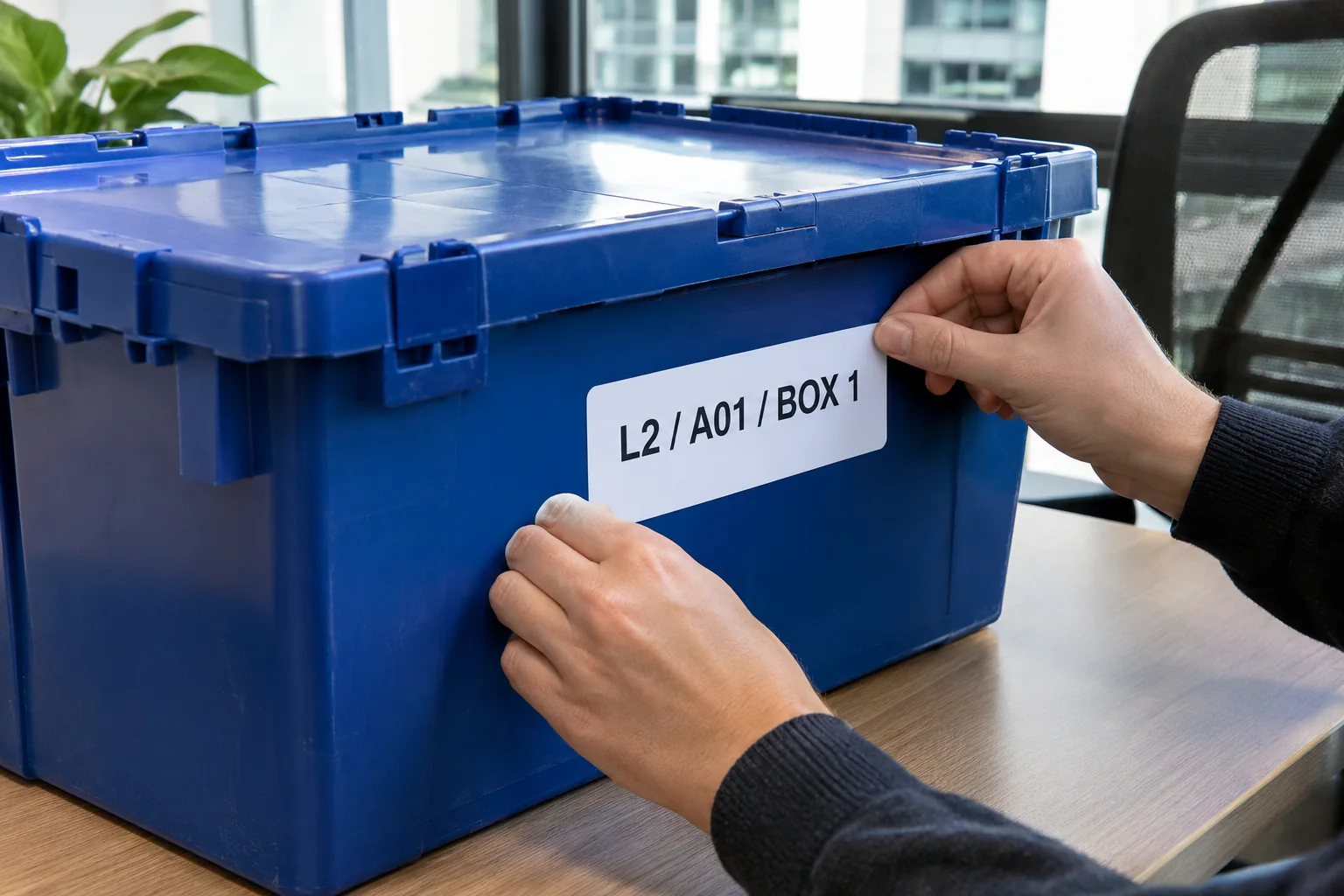
Finalise the quantity before writing “of 2” on every label. If a third crate is added, update the count and register rather than leaving a misleading set. Give staff a short packing brief showing one completed example and who to contact if they cannot identify a destination. Consistency is more useful than an elaborate label with fields no one completes.
Keep a separate inventory of what should travel. A label directs an item; it does not establish that it is included in the quote, adequately packed or safe to lift. Tell IRCO about heavy contents, unusual furniture and specialist equipment before collection.
Keep dismantled office furniture linked to its components
A workstation can become a top, frame, modesty panel, cable tray and fittings pack. If every part is labelled only “desk”, pieces from similar workstations can become difficult to match. Use the destination or item reference consistently and record the components expected for that item.
Agree who will dismantle and reassemble the furniture before the move. Some systems need particular tools, manufacturer instructions or a specialist installer. Do not assume ordinary transport includes all those tasks. Photograph the assembled item where useful and retain available instructions without presenting the photographs as a substitute for competent work.
Give the fittings a recorded home
Put fittings in a suitable closed container or bag identified with the matching item reference, then record where that pack will travel. For example, A01 desk fittings might be inside a clearly listed accessory carton. The important point is that the delivery team can find them without opening unrelated crates. Do not attach loose hardware to polished furniture with adhesive that could damage the finish.
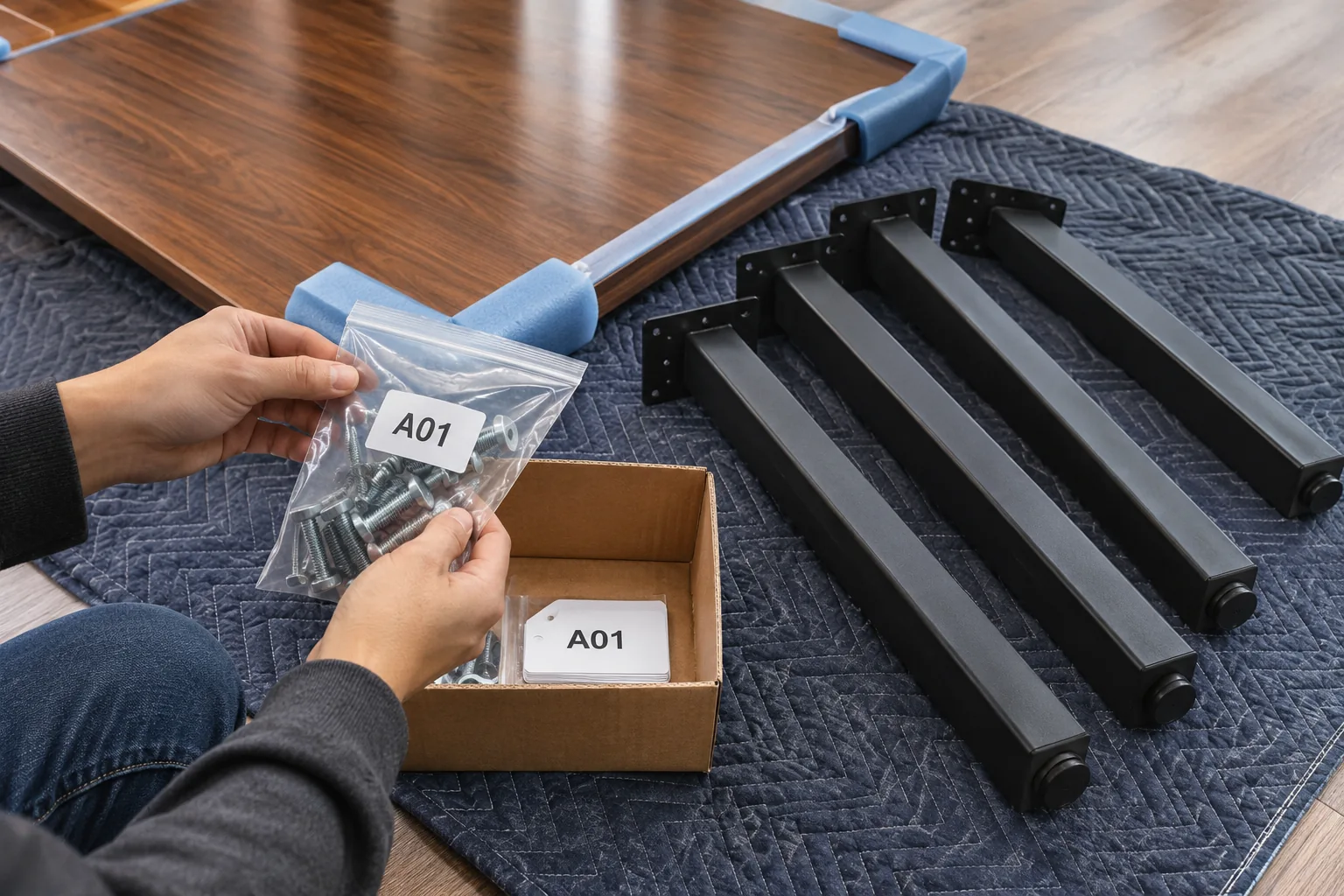
Label items staying behind just as clearly as those moving, using a distinct instruction such as “DO NOT MOVE” agreed with your coordinator. Keep disposal, storage and destination furniture separate on the inventory. A desk awaiting a sale should not be loaded because it has an old moving sticker, and disposal should not be assumed to be included in the removal booking.
For new furniture arriving from a supplier, retain the supplier’s package references as well as your destination codes. The commercial furniture receiving checklist explains how to distinguish packages from complete furniture items at handover.
Separate desk equipment and confidential records from ordinary furniture labels
Ask your IT contact to set the shutdown, backup, disconnection and restart plan. Staff should not unplug shared infrastructure or dismantle equipment simply because the furniture is ready to move. Identify devices that require specialist handling, leased-equipment approval or manufacturer guidance, and confirm the transport scope with IRCO.
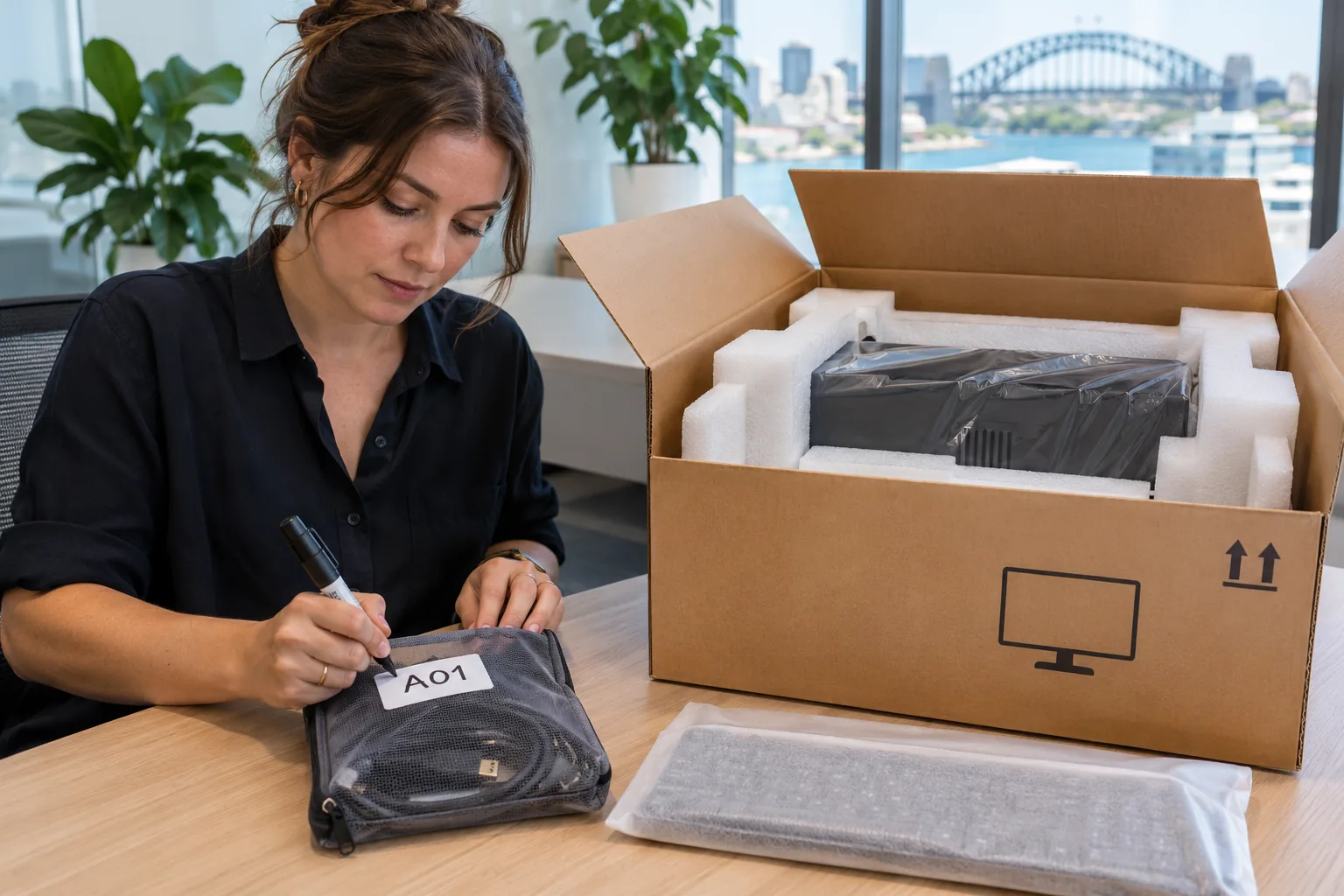
Use an equipment reference that your IT team can match to the destination. If a monitor, keyboard and cable pouch belong together, record the relationship without sticking labels onto a screen or blocking vents and ports. Pack each device appropriately; a destination label does not provide protection. Leave connection and testing to the responsible person after placement.
Keep sensitive details out of public-facing labels
Use a neutral reference for confidential record containers and maintain the detailed contents list with authorised staff. Agree who seals, carries, receives and stores those containers, and how handover is recorded. Do not write customer names, medical details, passwords or access codes on exposed labels.
The OAIC’s guide to securing personal information discusses physical files, access controls and transport to offsite locations. Use your organisation’s privacy and records procedures to decide the arrangements that apply. This office-labelling guide is not a secure-records transport service specification.
If staff will carry laptops or essential documents themselves, mark them as excluded from the removal load and keep them in a separate controlled area. Tell the coordinator before the inventory is finalised so the moving list and actual load remain aligned.
Use the same plan for staged office relocations
A floor plan tells the team where furniture belongs; a stage plan tells it when that furniture should move. Keep those as separate fields. A team moving on Friday should not be mixed with the team still operating until Monday simply because both are going to level 2.
Set out each collection stage, the inventory included, the receiving contact and the rooms available at that stage. Confirm building access and lift arrangements for each appointment. If the new premises are still being fitted out, identify a suitable agreed receiving area rather than assuming furniture can wait in a corridor.
Handle changed destinations before the item is unloaded
Nominate who can approve a change. If A01 is unavailable, that person should confirm the alternative, update the record and tell the moving office. A handwritten instruction passed to one crew member can be missed by the next team. Record any revised handling, storage or return visit that needs agreement.

| Exception | Useful instruction | Follow-up |
|---|---|---|
| Room unavailable | The approved temporary destination and person authorising it | Record where the item was placed and who arranges the next move |
| Label missing | Match the item to the inventory before assigning a room | Ask the coordinator; do not guess from its appearance |
| Item added late | Description, destination, preparation and handling required | Ask IRCO to assess any change to the agreed scope |
Where the plan involves several collections or deliveries, use our multiple-pickup and split-delivery guide alongside the label register. Clear stage references help prevent furniture from being released with the wrong group.
Check the office moving plan with IRCO before collection
Walk the old office with the final inventory and inspect a sample from every department. Check that labels are readable, destinations exist on the current plan and items marked to stay are clearly separated. Ask the receiving coordinator to check the new premises against that same plan.
Complete a placement check before unpacking spreads through the office
At delivery, reconcile the labelled pieces and crates against the register before removing labels or distributing contents. Record missing items, unreadable references and placement questions while the evidence is available. Furniture reaching its room does not mean assembly, IT setup or workstation checks are complete; identify who takes over each task.
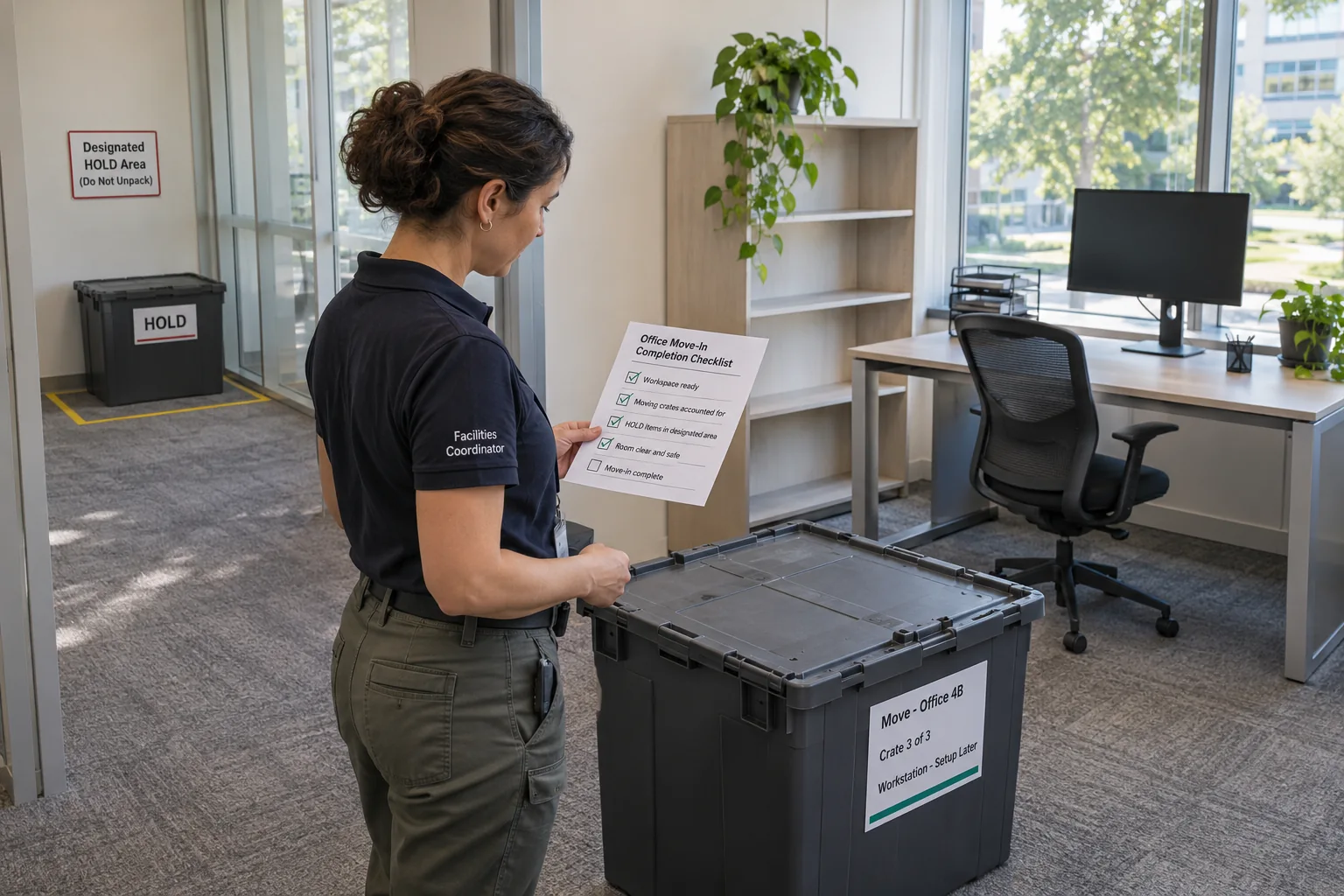
- One current floor plan with destination codes and a revision reference.
- A final inventory separating move, stay, storage and other agreed destinations.
- Consistent labels on packaging or suitable tags, with matching component references.
- Named collection and receiving contacts, plus someone authorised to approve changes.
- Agreed building access, stages, furniture handling and placement.
- A handover record for outstanding items and the person responsible for each next step.
Interstate Removalists Co can assess your furniture inventory, locations and requested handling together. Share the plan early, especially where a staged business relocation or several floors are involved. If you need furniture brought inside and placed, explain the destination and access when discussing our office furniture delivery service.
Request the move through IRCO’s quote page with your inventory, dates and access details. Confirm the accepted work in the written quote and read the moving terms and conditions before booking.
Office move labelling questions
How should I label furniture for an office move?
Use the destination code from the approved floor plan and an item or component reference where needed. Put the label on suitable protective packaging or an agreed tag, and confirm the labelling method with the moving office before preparing the full load.
Should office moving labels use staff names or desk numbers?
Destination codes are usually easier to match to a floor plan, particularly for shared desks or changing teams. Keep any staff allocation in the internal plan where the moving team does not need it. Avoid exposing unnecessary personal or confidential information.
Is colour coding enough for an office relocation?
Use colour as an additional visual cue, with a readable written destination code. Colour alone can be unclear on a black-and-white plan or to someone who cannot easily distinguish the colours.
How do I keep desk parts and fittings together?
Give components and the fittings container the matching item reference. Record where the fittings pack will travel and confirm who will dismantle and reassemble the furniture. Follow manufacturer guidance for systems needing specialist work.
What if an office room changes after labels are printed?
Update the current floor plan, affected labels and moving instructions together. Tell IRCO and the receiving coordinator which revision applies, and identify who can approve any further changes.
Can office furniture be moved in separate stages?
Ask IRCO to assess the stages, inventory, access and receiving availability. Keep the stage reference separate from the destination code and confirm which furniture is included in each agreed collection and delivery.
Does IRCO reconnect computers after an office move?
Do not assume IT disconnection, reconnection or testing is included in furniture transport. Your IT contact should direct those tasks, and any specialist assistance must be discussed and expressly agreed before booking.
What does IRCO need to quote an office relocation?
Provide both locations, the furniture and crate inventory, dates or stages, floors, lift and loading access, and the handling or placement you want included. A readable destination plan helps explain the scope, but the written quote must confirm the accepted work.
Bring your inventory and destination plan to Interstate Removalists Co for an office moving quote. Our moving guides cover the other preparation decisions.