Interstate removals with two pickup addresses or split deliveries
Moving does not always mean taking everything from one home to another. You may have furniture in storage, belongings at a family address or items going to more than one household.
Here is how to bring those stops into one clear enquiry, keep the right goods together and help Interstate Removalists Co assess the whole move.
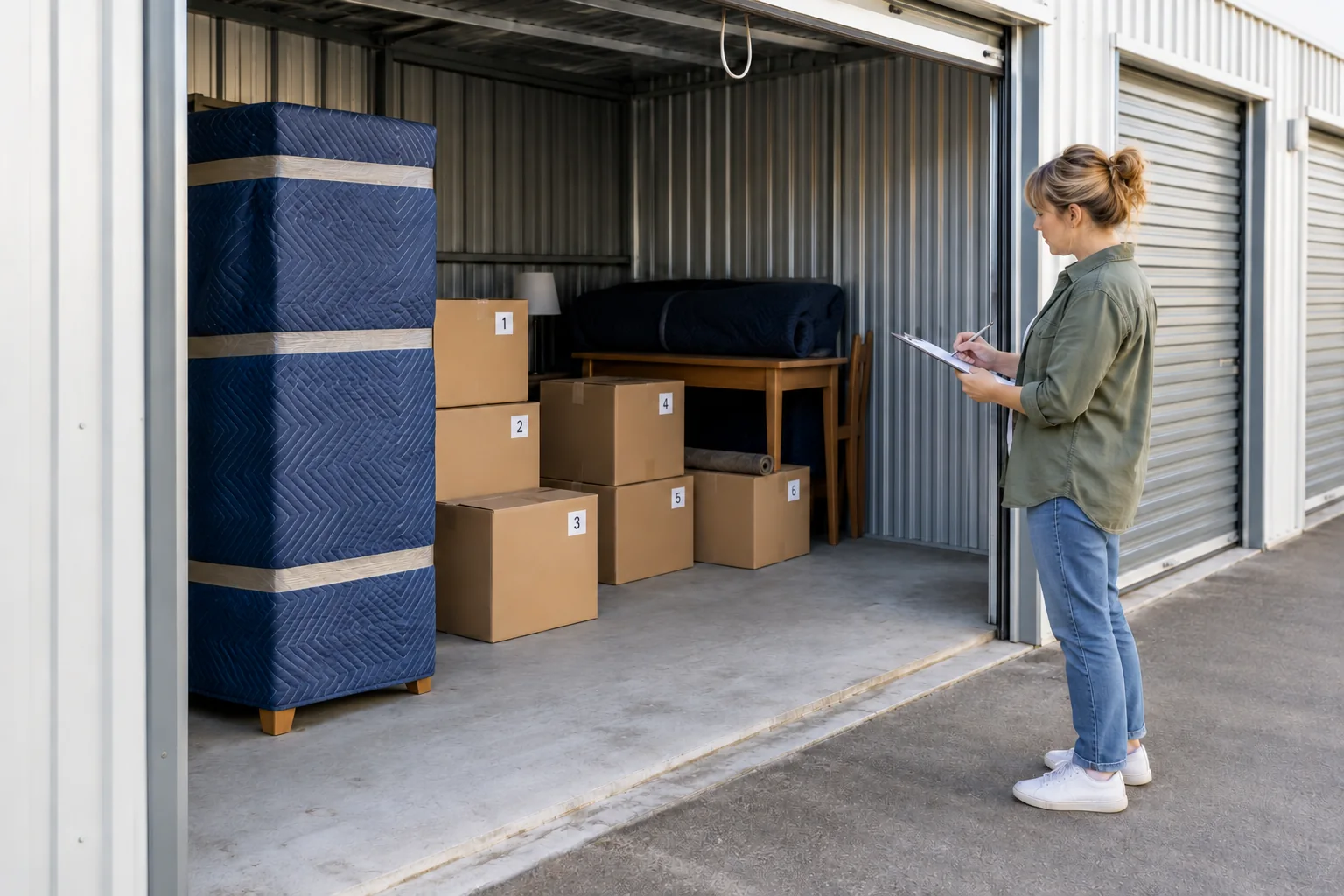
One move can involve more than one front door
You might be collecting furniture from your home and a storage unit, combining two households, or sending some belongings to your new home and others to family. Those are practical reasons to ask for an interstate removal with multiple pickups or split deliveries.
Put every address and its allocated items in the first enquiry. An extra stop can change the route, handling time, loading plan and quote. Interstate Removalists Co can assess the full arrangement, including whether the dates and locations fit a suitable service. Collection order and delivery windows need confirmation before you make commitments at the properties.
Start with our interstate moving service if you need a household move planned around several locations. If your dates are flexible, interstate backloading may also be worth assessing against the complete itinerary.
Which type of multi-address move do you need?
| Your situation | What the booking needs | The detail often missed |
|---|---|---|
| Home and storage unit to one new home | Two pickup addresses, a separate inventory at each and one delivery address. | Storage access hours, unit location, release authority and who can open it. |
| Two households combining interstate | Both household inventories and pickup windows, with one agreed booking contact. | Duplicate furniture names and two different people changing the item list. |
| One home to a new home and a family address | A destination for every item and a receiving contact at each property. | A small family delivery may still involve a detour, stairs and unloading time. |
| Some goods now, the rest after settlement | Separate delivery dates, a holding arrangement and a later delivery plan. | This can involve storage and additional handling, not simply another stop on the same trip. |
Use our guide to storage between homes when belongings need to wait for keys or settlement. A split delivery to two addresses and a delayed delivery after storage need different arrangements, even if the furniture list is identical.
Build one master inventory, then group it by address
Give each pickup a short code such as P1 and P2, and each destination a code such as D1 and D2. Keep the complete addresses in the booking details. The codes make the item list and labels easier to read; they do not decide the order in which the truck will visit.
Number the furniture and cartons, then assign each item to a pickup and destination. A dismantled bed may need several component labels under one item number, such as 06A, 06B and 06C, with the fittings clearly matched. For cartons, use individual numbers or a checked range: “cartons 01–08” is more useful than “a few boxes”.
| Item and quantity | Collect from | Deliver to |
|---|---|---|
| 01: three-seat sofa | P1 — current home | D1 — new home, living room |
| 02–05: four dining chairs | P1 — current home | D2 — family home, dining room |
| 06A–06C: bed components and labelled fittings | P2 — storage unit | D1 — new home, bedroom 2 |
| 07: sideboard; 08: dining-room carton | P2 — storage unit | D2 — family home, dining room |
This is an allocation example, not a proposed driving route. Add dimensions, approximate or known weights where relevant, condition notes and photos for bulky or delicate items. Confirm the total cartons and furniture across all addresses; do not count a group twice when copying it into a destination list.
AFRA's inventory guidance explains why the complete list matters for an accurate removal quote. For a multi-address move, adding a pickup and destination to that list makes it useful at every handover too.
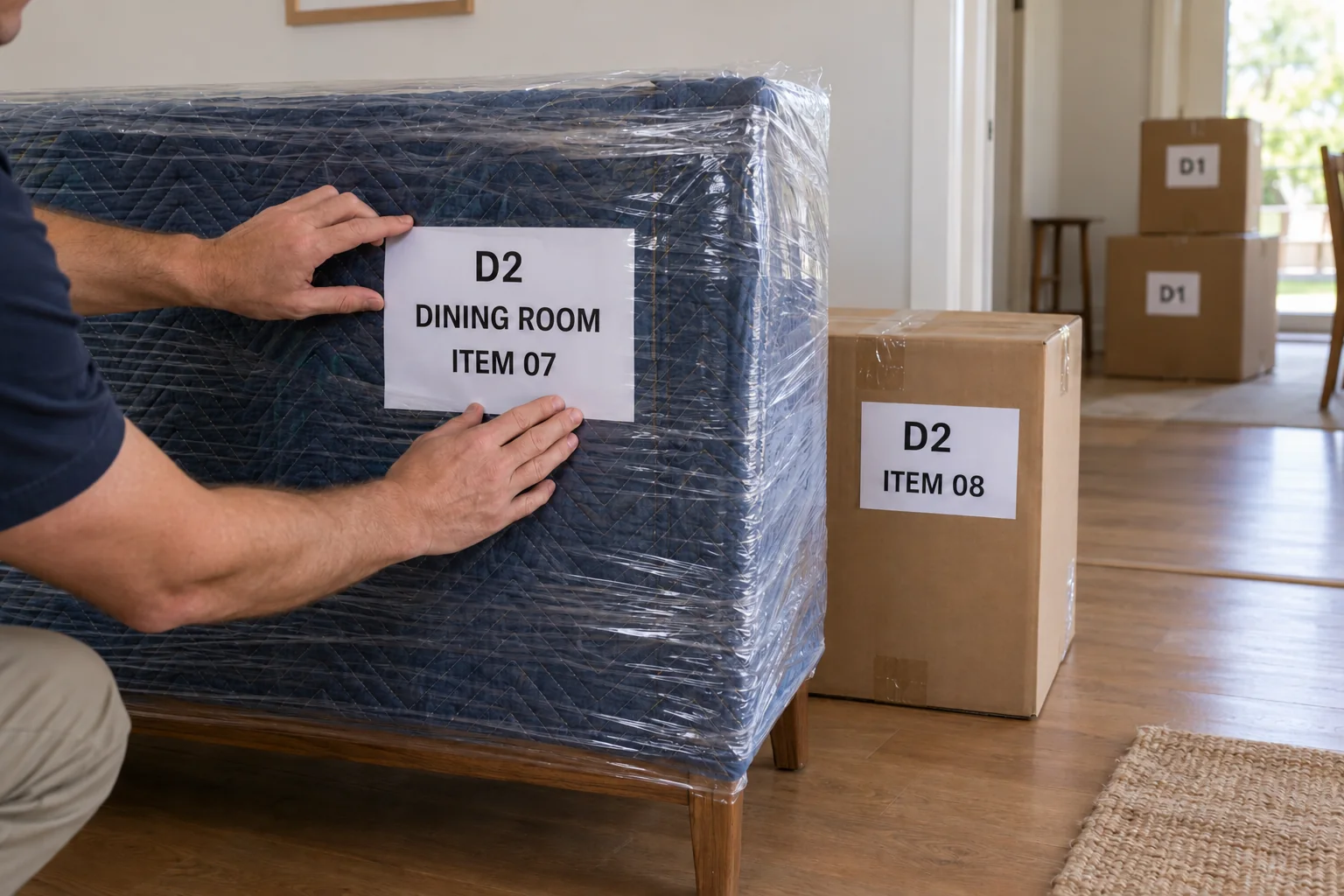
Label the destination before the room
Use a label such as “D2 — dining room — item 07”. Put labels where they can be read on cartons or suitable protective wrapping. Keep adhesive away from furniture finishes and make sure the label will stay attached during handling.
Colour can help separate groups, but include written codes and item numbers as well. Cover obsolete destination labels and give each receiving household its own item list. Avoid a carton containing belongings for two different delivery addresses; it will need sorting before collection.
Keep the full address key with the booking and the people involved. Names such as “Mum's place” are easy to understand within a family but do not identify a property to the removal team.
Check access separately at every stop
Do not let the main home's access description stand in for the other properties. The storage unit may be upstairs, the second pickup may have a long driveway, and the family delivery may require a stair carry. Each one changes the work.
- At homes: provide truck parking information, carrying distance, steps, stairs, doorways and any lift booking. Include photos of the actual furniture path.
- At storage: provide the facility and unit location, opening hours, access procedure, loading area and any lift or trolley restrictions. Confirm who is authorised to release the goods and who will meet the team.
- At a seller or relative's property: confirm the item is ready, who owns or can release it, the available collection window and the preparation required.
- At every destination: confirm keys, room placement, a receiving contact and the earliest date the goods can be accepted.
Share entry codes or other sensitive access details directly through the agreed booking channel when needed, rather than writing them on cartons. If belongings in storage are hard to reach, arrange access to inspect and count them before finalising the inventory.
For a move made up of selected pieces, our small interstate removals guide explains how service minimums, access and furniture volume affect the enquiry.
Separate your deadlines from the proposed stop order
List each property's availability: when the goods are ready, when you must vacate, when the storage office is open and when the receiving person can attend. Mark a deadline as firm or flexible. This gives the office the information needed to assess the sequence.
The nearest address is not necessarily the first stop. Vehicle access, loading space, furniture protection, onward travel and appointment windows can all affect the plan. Tell the removalist which items go where, then let the operator determine a suitable loading and restraint arrangement. Do not assume the last items collected will be the first delivered.
Example: the storage unit closes before the house is ready
If storage access ends at 4 pm but the home cannot release its furniture until late afternoon, give both limits at the enquiry stage. The office may need to assess another collection day, different scheduling or a separate leg. A fixed storage closing time cannot be solved by simply adding the unit as a note after booking.
Ask whether the proposed arrangement involves transfers, holding or separate vehicles, and how handovers will be recorded. Keep medicine, travel documents, keys and essentials needed before delivery with you.
Can a backload include an extra pickup or delivery?
It may be possible when all locations, the load and the available dates fit suitable shared capacity. A second address needs assessment even if it appears close to the main route. Access, time at the property and the ability to keep delivery groups identifiable still matter.
Give IRCO the complete itinerary when asking about backloading removal options. Explain any fixed appointments before choosing a flexible service. Extra stops are not automatically included, and a shared load is not a guarantee of a lower total once the complete work is considered.
If one location has a narrow window, ask whether the whole move should be scheduled differently or whether that leg needs a separate arrangement. Compare the total cost and responsibilities, including any additional loading or temporary storage.
What affects the price of multiple pickups and split deliveries?
The quote needs to account for all goods and all stops. There is no useful universal “extra address” price: a nearby garage collection and an upstairs apartment pickup can involve very different work.
- Additional travel: the location of each stop relative to the proposed route.
- Handling: time to collect or deliver, carrying distances, stairs and any furniture preparation.
- Load size: the combined furniture and carton inventory, including goods at storage or another household.
- Appointments: access restrictions, waiting, lift bookings and the consequences of an unavailable contact.
- Separate stages: storage, transfers or a later delivery where the goods cannot travel through the proposed arrangement together.
Ask the written quote to identify every address, its item allocation, the proposed date arrangements, inclusions and relevant extra charges. Queensland's guidance on using a removalist is a useful independent reference when comparing the booking details.
If two households are sharing the cost, agree who approves the booking and changes. Confirm any requested invoice arrangement with the office; privately dividing a bill does not automatically create two separate transport bookings.
Give every address a place in the plan
Send us the pickups, destinations and furniture allocated to each. If a date or address is still uncertain, tell us that too. We can assess the available arrangements and help clarify what needs to be settled before booking.
Keep collection and delivery checks separate
At each pickup, check the items leaving against that location's list. Identify anything staying behind before loading starts. Tell the team about labelled components, fragile pieces and condition notes, and retain the agreed handover record.
At each delivery, the receiving person should have the list for that destination. Check item numbers, quantities and visible condition as goods arrive, then raise discrepancies promptly. The contact at D1 should not be expected to confirm items being delivered to D2.
If an address, item or receiver changes
Contact the office before collection or delivery and obtain written confirmation of the revised scope, timing and price where applicable. Update the master list, the affected labels and each receiving person's copy. Include the date or version on the plan so an old screenshot does not become the instructions on moving day.
IRCO's terms and conditions address customer responsibilities, access and changes. A receiver needs to be available and authorised; do not assume the team can leave belongings at an unattended address or divert to a new one without prior agreement.
Build your multi-address moving enquiry
Fill in the details you know and mark anything uncertain as provisional. Build a summary, then copy it into your IRCO quote enquiry. This tool does not send a booking or confirm availability.
Multiple pickup and split delivery questions
Can interstate removalists collect from two addresses?
Yes, multiple pickup addresses can be assessed as part of an interstate moving enquiry. Include both addresses, a separate item list for each, access details and availability. The route, capacity, handling and collection windows must be confirmed before the extra pickup is treated as booked.
Can furniture be collected from my home and a storage unit?
Provide the home and storage addresses, with the goods at each listed separately. Include the storage unit location, access hours, loading area, release authority and who can open it. Confirm the facility requirements and proposed collection appointment before the move.
Can one interstate move be delivered to two different homes?
A split delivery can be assessed when each item has an allocated destination and both receiving arrangements are clear. Give the complete addresses, furniture lists, access and contacts at the enquiry stage. Delivery order, timing and any additional charges need written confirmation.
How much does an extra pickup or delivery stop cost?
It depends on the detour, load, handling time, access and appointments involved. A small item can still require significant travel or a stair carry. Ask for a quote covering the complete itinerary and for the extra stop to be identified; there is no universal extra-address price.
Can a backloading move include multiple pickups?
It may be possible if every pickup and delivery fits suitable route capacity and date windows. Give the entire itinerary when requesting a backload. Extra stops are subject to assessment and are not automatically included or guaranteed to make the overall move cheaper.
How should I label furniture for split delivery?
Use a written destination code, room and unique item number, such as D2 — dining room — item 07. Put labels on cartons or suitable protective wrapping, not directly on furniture finishes. Keep a matching address key and inventory, and replace obsolete destination labels.
Do I need a separate inventory for each pickup address?
Keep one master inventory that assigns every item to a pickup and destination, then create a list for each location. This helps avoid missing goods and duplicate counts. Label components of dismantled furniture consistently and keep the relevant list with each person attending a handover.
Can two households combine their furniture into one interstate move?
Ask IRCO to assess both inventories, addresses and availability as one proposed arrangement. Nominate a booking contact to coordinate approvals and changes. Confirm the transport scope and any requested invoice arrangement with the office; a private cost-sharing agreement does not automatically create separate bookings.
Will all pickups and deliveries happen on the same day?
Do not assume that they will. The proposed route, access windows, capacity and distance determine the arrangements. Ask for the collection and delivery windows for every stop and whether transfers, holding or separate vehicles are involved. Keep essentials with you until the goods arrive.
Can some belongings be delivered now and the rest after settlement?
That needs a separate assessment of holding or storage and the later delivery. Identify the items needed first, the receiving dates and any access you need while the rest are stored. Obtain the storage, handling and redelivery scope before booking.
Can a relative receive one part of the delivery?
Nominate an authorised receiving person for that address and confirm their availability. Give them the relevant destination inventory and agreed delivery details. They need to check the items delivered to their property and raise discrepancies promptly; do not assume unattended delivery is available.
What happens if I add another address after booking?
Contact the office as soon as possible and request confirmation of the revised scope, timing and any price change. An additional stop is subject to route and capacity assessment. Update the master inventory, labels and receiving contacts only after the revised arrangement has been agreed.
Take the next step with IRCO
Explore interstate moving services for the complete household plan, backloading options for suitable flexible moves, or furniture transport when you are sending selected pieces.
Ready to talk through your move? Request a quote from Interstate Removalists Co with the details you have, or call 0417 918 451. For more planning help, browse our interstate moving guides.