Moving garden equipment to Perth: cleaning, WA quarantine and packing
Taking a mower, garden tools or outdoor furniture to Perth? A little preparation in the shed can save a lot of uncertainty when your household goods are ready to travel.
Use this guide to sort the inventory, check the places dirt collects and organise the paperwork and packing with Interstate Removalists Co.
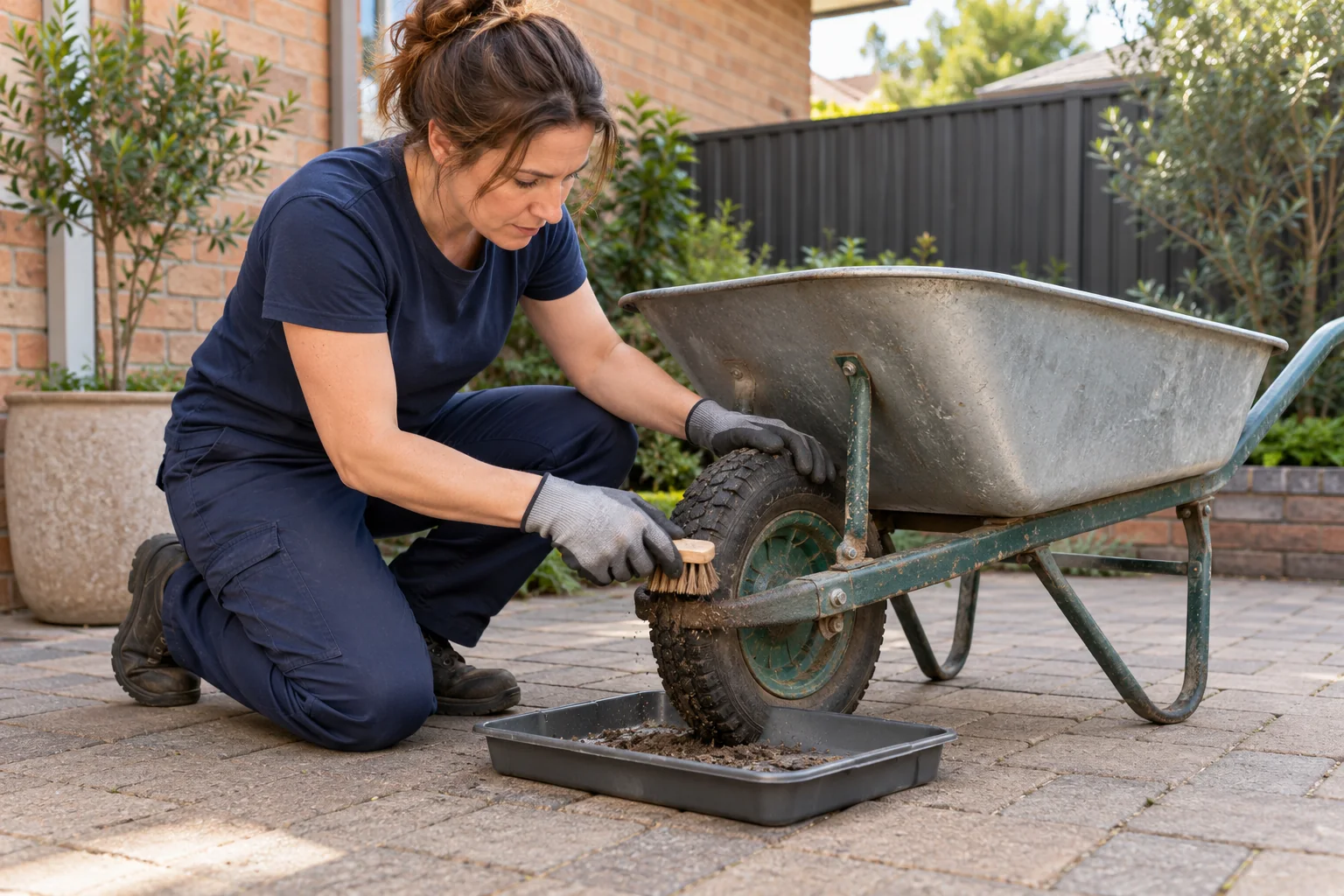
Moving garden equipment to Perth starts before packing
A lawnmower can look tidy from above and still carry grass beneath its deck. A stack of empty pots can hide soil between the bases. Those are the details to deal with while you still have water, cleaning tools and time at the old home.
This guide is for household outdoor equipment entering Western Australia, whether your delivery is in Perth or elsewhere in the state. Start your Perth removalist enquiry with a separate garden-and-shed inventory. For another WA destination, include the actual town and postcode in your Western Australia moving enquiry.
Check three things separately: the equipment is prepared properly; the current WA entry and declaration requirements are addressed; and IRCO has accepted the items and transport arrangements. Completing one does not automatically complete the others.
Use DPIRD’s current guidance for bringing personal goods into WA early in the move. Conditions can change, and the goods’ origin matters. Describe anything uncertain before packing it deep inside the household load.
Make a garden inventory that catches the awkward items
Walk through the shed, patio, garage and side passage with your phone. Include the equipment you rarely use: the folding garden trolley, spare mower catcher, muddy camping pegs and boots behind the back door. Photograph each group, then give larger pieces individual names or item numbers.
| Item | Places to check | Details for the moving enquiry |
|---|---|---|
| Mower and grass catcher | Wheel tread, catcher seams, guards and accessible recesses, following the model’s safe preparation instructions | Make, model, power source, dimensions and separate catcher; preparation still required |
| Whipper snipper and garden tools | Guard, tool heads, handle joints and attachments; identify sharp edges needing protection | Tool list, removable attachments and any petrol or battery equipment |
| Wheelbarrow or garden trolley | Tyre grooves, axle area, tray corners and underside of the frame | Overall size, handle position and whether anything will be removed for transport |
| Empty pots and planters | Inside surfaces, drainage holes, saucers, bases and spaces between nested pots | Quantity, material, size, fragility and confirmation that no plants or soil are packed with them |
| Outdoor furniture and accessories | Feet, joints, hollow sections that are accessible, cushions and undersides | Furniture dimensions, condition, packing needs and any unusual natural materials |
| Boots, bikes and camping equipment | Soles, tyres, pegs, ground-contact surfaces, bags and folded fabric | What is included, cleaning completed and any concealed or uncertain contents |
Write “not checked” where needed. It is more useful than marking the entire shed “ready” while its contents are still boxed. Include tools stored inside a mower bag or trolley; a container name alone does not describe what is travelling.
Separate equipment, plants and restricted shed contents
DPIRD’s WA entry questions and answers explain that used garden equipment must be free of soil, seeds and plant material. Empty plant pots also need cleaning. These goods still need to be declared for inspection; a clean appearance is not an exemption.
Equipment to prepare
List the tools, empty pots and outdoor furniture you want assessed. Give yourself a place to clean, dry and check them before they join the packing area.
Items needing an answer
Set aside unidentified shed products, powered equipment and unusual natural materials. Photograph the product label or model plate and ask about acceptance before boxing them.
Items outside IRCO’s scope
IRCO’s published terms exclude plants from interstate removals and storage, and exclude dangerous goods including gas cylinders, volatile liquids and fuel containers.
Check the IRCO booking terms when deciding what stays behind. WA may allow particular plant material under specified conditions, but that does not change IRCO’s plant exclusion. Emptying a planter for the move means arranging another suitable home for its plant and contents, then preparing the empty container separately.
Keep potting mix, compost, loose seeds and garden chemicals out of general household cartons while you resolve their disposal or other arrangements. Do not hide them among tools or assume an unopened bag is automatically acceptable.
Clean in an order that keeps the finished equipment clean
- Identify the equipment and read its instructions. Make powered tools safe under the manufacturer’s procedure before cleaning. STIHL’s mower cleaning guidance illustrates why isolation, cleaning methods and the permitted position of the machine matter. Use your own model’s instructions.
- Remove visible debris from accessible surfaces. Work around wheels, joints, guards and catchers. Use suitable tools without reaching into blades or dismantling safety components. Arrange competent help where access is unsafe or the manual is unclear.
- Clean with a method suitable for the material. High-pressure washing is not a universal answer for machinery. Protect electrical parts and follow the manufacturer’s limits. Collect removed soil and plant debris at the cleaning location.
- Let the item dry before packing. Check recesses, fabric bags, pot bases and cushions as well as the obvious surfaces. A dry exterior can conceal water trapped in a folded cover.
- Move it to a clean staging area. Use a clean garage floor, bench or suitable protective sheet. Avoid rolling cleaned wheels back across the lawn or placing pots straight onto a garden bed.
- Check, photograph and label. Record the item number and readiness in your inventory. If you use it again before collection, inspect and clean it again as needed.
Choose the last gardening day before the cleaning day. Leaving the mower available for “one final cut” after it has been prepared is an easy way to undo the work. Keep basic household cleaning equipment available separately until the property handover.
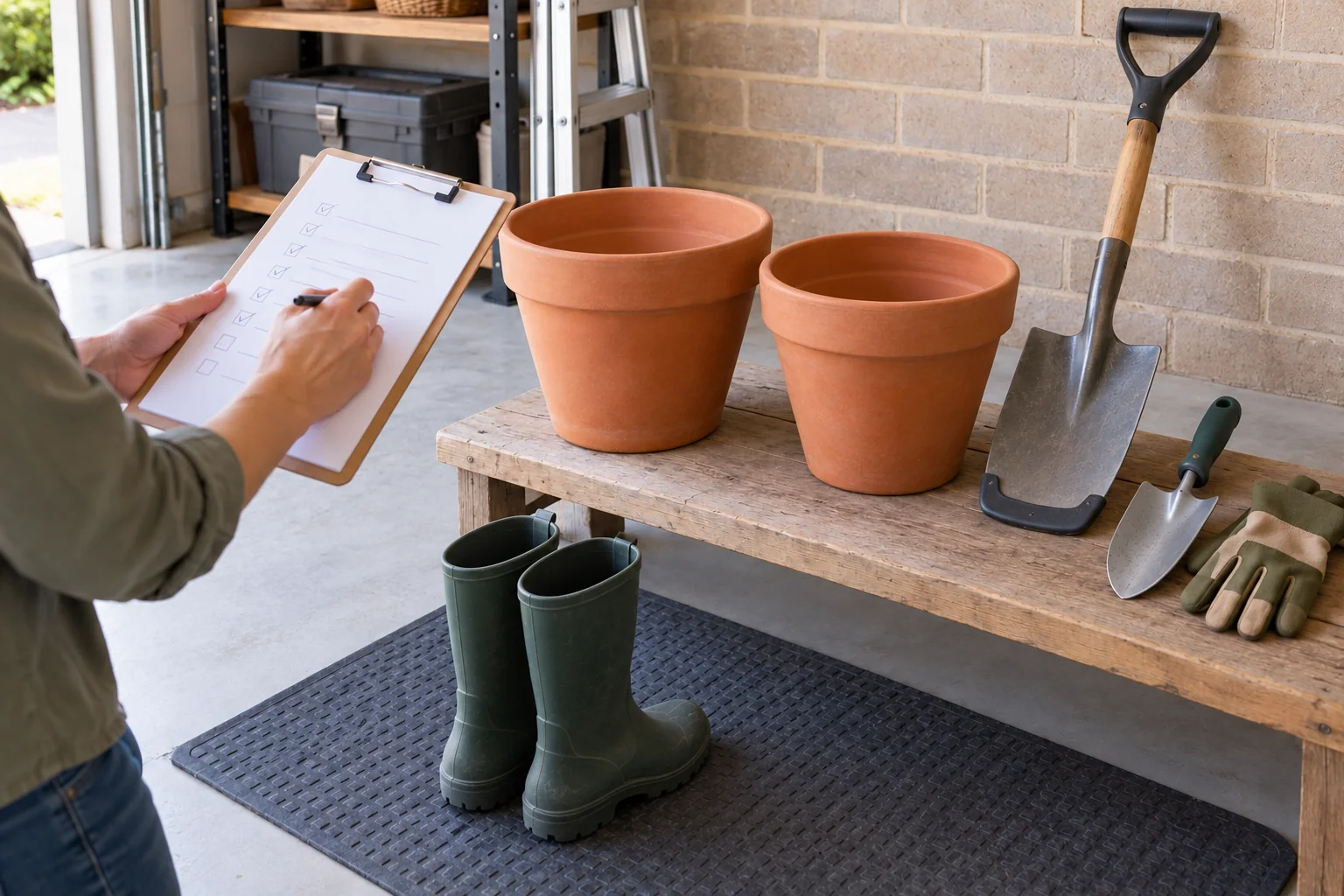
For fragile pots, protect rims and separate surfaces so they cannot knock together. Sharp tool edges also need suitable protection. Ask about packing help for accepted outdoor goods before collection, identifying which preparation you will complete yourself.
Petrol mowers and battery tools need a transport decision too
Quarantine cleaning does not establish that a powered item is ready for the removal truck. Supply the mower or tool model, fuel type, battery details and known condition. Ask IRCO what can be accepted and what preparation is required under the proposed transport arrangement.
Do not pack fuel containers or a barbecue gas cylinder with the garden load. If a machine needs fuel-related preparation, follow the manufacturer’s instructions and arrange appropriate assistance. Avoid improvised draining, decanting or running procedures based on a general moving checklist.
List batteries separately even when they normally sit inside a tool. Explain whether they are installed or removable and report damage, leakage or abnormal heating. Do not pack a damaged or suspect battery pending advice. The correct transport decision depends on the equipment and its condition, not simply on whether it fits into a carton.
For a barbecue, identify the unit, its fuel source, detachable parts and cleaning needs. Ask about the accepted appliance itself separately from the excluded cylinder or fuel container. Keep the agreed preparation alongside the inventory so everyone is working from the same answer.
Connect the WA declaration to the actual packed load
Use the current personal-goods declaration available through DPIRD’s biosecurity forms page. Complete it with the removal company so transport and arrival details agree. The form asks about used garden equipment and whether it has been cleaned; cleaning the equipment does not turn it into an undeclared item.
Prepare a simple inventory beside the official paperwork:
- G01 — mower: model, separate catcher, cleaning status and transport preparation confirmed or outstanding.
- G02 — empty pots: quantity and the carton or protected group containing them.
- G03 — garden tools: item list and the labelled package holding them.
- G04 — outdoor furniture: pieces, condition and any material requiring clarification.
The declaration directs relevant goods to be packed at the container entry. Agree accessible placement with the loading team while maintaining a secure load. Do not independently move heavy equipment to an unstable position just to make it easier to reach.
For a self-pack arrangement, settle that access before loading begins. Our self-pack container loading checklist helps you discuss the unit, packing and responsibilities together. A handwritten inventory supports the official declaration; it does not replace it.
Keep documents and photos available outside the packed load. Confirm the relevant inspection arrangements with the office and, where needed, Quarantine WA’s inspection contacts. Fees or further work may apply, so ask how any inspection-related changes will be handled.
Three small details worth catching before collection
The mower is clean, but the catcher is not
Treat attachments as separate inspection points. Open the empty catcher as its design allows and check folds and seams. Update the inventory only when both machine and accessories have been prepared.
The pots are empty, but the stack has not been separated
Unstack them and inspect individual bases, drainage holes and saucers. Clean and dry before nesting with suitable protection. Record the number of pots, rather than describing an unexamined stack as one item.
The clean wheelbarrow is used during the final garden tidy
Return it to the preparation check. Tyres and tray corners may need cleaning again. Keep a visible “checked” list so another household member knows which equipment is already ready for packing.
Finish with a clear handover, not a sealed mystery box
Before collection, review accepted items, completed cleaning, unresolved transport preparation and the declaration with your booking contact. Check that labels match the inventory and that inspection access has been considered. Tell IRCO if the contents change after the quote or paperwork is prepared.
A useful handover note says what still needs attention and who is doing it. For example: “G01 catcher cleaned and dry; mower transport preparation awaiting model advice.” That gives the office something specific to resolve before the truck arrives.
The enquiry tool below helps organise that conversation. It is not an official biosecurity declaration or an assurance that goods will be cleared.
Moving from Perth to another state?
This guide covers entry into WA. For an outbound Perth move, check the destination state’s current requirements and tell IRCO which outdoor goods are travelling. Use the Perth interstate removals service to discuss the complete route and load.
Prepare your Perth outdoor-equipment moving enquiry
Fill in the details you know and mark anything uncertain as provisional. Build a summary, then copy it into your IRCO quote enquiry. This tool does not send a booking or confirm availability.
Moving garden equipment to WA: questions and answers
Can I take a lawnmower and garden tools to Perth?
Used garden equipment can enter WA subject to the applicable requirements, including cleaning and declaration for inspection. Separately, give IRCO the inventory, model and power-source details so acceptance and transport preparation can be confirmed. A clean mower is not automatically ready for carriage.
Do I need to declare garden equipment if it is already clean?
Yes. The personal-goods declaration distinguishes the presence of used garden equipment from whether it has been cleaned. Answer the applicable questions accurately and coordinate the paperwork with the removal company. Keep the equipment identifiable and accessible under the agreed loading plan.
Which parts of a mower should I check before an interstate move?
Check the wheels, catcher, guards and other accessible areas where debris collects, using the model’s safe preparation instructions. Treat detachable accessories as separate items. Do not reach into blades or improvise a tipping position; arrange appropriate help where cleaning cannot be completed safely.
Can empty plant pots travel with my household goods to WA?
Empty pots need to be free of soil, potting mix and plant material and declared for inspection. Separate nested pots, check drainage holes and saucers, and let them dry before protective packing. Include their quantity and fragility in the inventory submitted to IRCO.
Will IRCO move my plants interstate to Perth?
No. IRCO’s published terms exclude plants from interstate removals and storage. WA’s conditional entry requirements for some plant material do not change that carrier exclusion. Arrange your plants separately and discuss only the prepared empty pots you want included with the household goods.
Can I pack petrol containers or a barbecue gas cylinder?
IRCO’s terms exclude dangerous goods including fuel containers and gas cylinders. Keep them out of the removal load. Ask about the barbecue or powered equipment separately, supplying its model, fuel source and condition so any acceptable transport arrangement and preparation can be assessed.
How should I prepare cordless garden-tool batteries?
List the batteries and tools, including whether batteries are removable and any known damage or abnormal behaviour. Obtain the applicable manufacturer guidance and IRCO’s acceptance instructions before packing. Do not include a damaged, leaking or suspect battery while its safe handling remains unresolved.
Is pressure-washing the best way to clean a lawnmower for moving?
Not necessarily. The suitable method depends on the machine, its electrical and mechanical components and the manufacturer’s instructions. High-pressure washing can be unsuitable. Make the equipment safe under its manual, use the permitted cleaning method and allow it to dry before packing.
Should garden equipment be packed near the container doors?
The WA personal-goods declaration directs relevant goods to the container entry for access. Coordinate that requirement with the loading team and secure-load plan. Keep labelled groups identifiable and discuss the arrangement before a self-pack container is filled, rather than rearranging heavy goods at the last minute.
Does a removalist enquiry summary replace the WA declaration?
No. The enquiry summary helps IRCO assess the inventory and preparation. Use the current official declaration and complete the transport details with the removal company. Keep a copy available with the item list and confirm any inspection arrangements before the goods travel.
Can quarantine inspection affect the delivery arrangements?
Inspection or further preparation may affect the move and involve charges. Ask how the proposed transport handles inspection, access to the goods and any resulting changes. Accurate declarations and careful preparation help the process, but they do not guarantee clearance or a delivery time.
Do the same WA entry rules apply when moving from Perth?
This guide addresses goods entering Western Australia. For a move from Perth to another state, check that destination’s current requirements and the conditions for the goods being sent. Give IRCO the origin, destination and outdoor inventory so the correct route can be assessed.
Talk through your move with IRCO
Bring the outdoor list together with the furniture and cartons in your interstate household moving enquiry. Include the preparation you have completed and the help you would like assessed so the office can respond to the actual load.
Request a quote from Interstate Removalists Co with the details you have, or call 0417 918 451. You can find more practical planning help in our interstate moving guides.