Brisbane collection
Confirm the pickup address, date window, access, furniture list and who will check items as they are loaded.
Plan the mainland pickup, sea crossing, Tasmanian entry requirements and Hobart delivery as one move. Use this guide to prepare a household inventory, compare full removals and backloading, and ask clear questions before booking furniture transport.
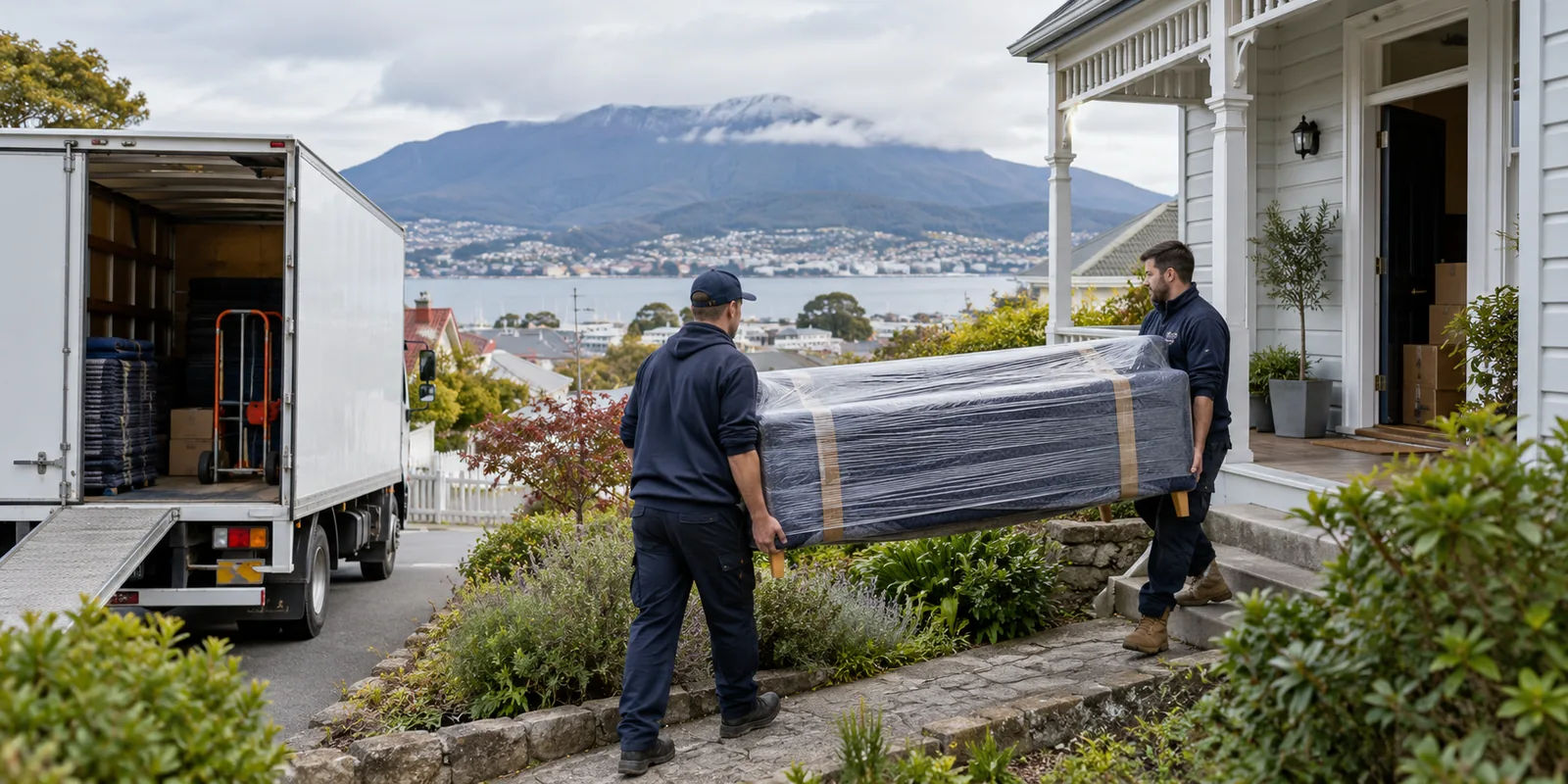
A move from Brisbane to Hobart has a mainland collection, an interstate journey, a Bass Strait crossing and a Tasmanian delivery. The route and handover arrangements for a particular consignment are decided by the moving company; do not assume the same truck travels door to door. Ask where the furniture is handled or transferred, who coordinates each leg, and how the Hobart delivery date will be confirmed.
Confirm the pickup address, date window, access, furniture list and who will check items as they are loaded.
Ask the mover about the transport plan, any transfer of goods and how crossing schedules affect the delivery window. Spirit of Tasmania freight information explains one mainland–Tasmania freight connection; it does not establish which service your mover uses.
Confirm the receiving address, safe truck access, key availability and an authorised person to direct unloading.
If you are still searching for a home in Hobart, say so before committing to dates. Discuss a storage arrangement, its location, access and charges if your furniture might arrive before you can receive it. Keep everyday documents, medication and essentials with you during personal travel.
A Brisbane to Hobart removalist needs more than a bedroom count. Make a room-by-room list of furniture and cartons, then add items under the house, in the garage, on the balcony and at any separate pickup location. Include bikes, tools, outdoor chairs and garden equipment because Tasmanian entry checks may matter for those goods. Identify what will stay behind so the furniture truck is booked for the actual volume.
Measure large pieces, especially a lounge, fridge, dining table or bed that must pass a stair turn or apartment lift. Note anything unusually heavy, fragile or difficult to dismantle. Send photos of both property entrances, driveway or loading bay and any narrow internal access. Your inventory can distinguish whole-home moving from furniture-only transport or a few selected items.
For each carton, record a destination room and a broad contents category. Numbering boxes against your list helps you check what was loaded and unloaded without publishing private contents on the outside. Tell the office promptly if the list changes: extra goods can change the space and labour needed.
A full household relocation may need a coordinated collection, packing support, furniture protection, transport and unloading. A smaller move may suit shared capacity. Backloading means using suitable space on a scheduled movement; availability, collection and delivery flexibility, transfers and scope vary by quote. Ask whether the proposed arrangement covers the complete inventory and both property addresses.
“Cheap removalists Brisbane to Hobart” is a useful comparison only after you match the actual work. Compare the handling, collection window, crossing coordination, delivery access, optional storage, packing and any extra charges in writing. For awkward items or a fixed key handover, explain the constraint before deciding whether a shared load is practical.
If you are moving from Hobart back to Brisbane, the Hobart removalists page covers local service options. This guide is specifically for the Brisbane-to-Hobart direction, including the Tasmanian arrival tasks.
Tasmania has biosecurity requirements for household goods arriving from the mainland. The official Biosecurity Tasmania moving guidance directs permanent movers to complete and lodge a personal-effects declaration before import. It provides a specific declaration for goods transported by a removalist, separate from self-moving goods. Ask your moving company who coordinates the form and when they need your completed information; follow the current agency instructions for lodgement.
Check the actual item rules before packing. The agency’s household and recreational item advice explains the need to declare relevant goods and the possibility of inspection. Clean dirt, soil, seeds and plant material from footwear, camping equipment, bikes, outdoor furniture, tools and garden gear. A visibly clean item still needs to meet any applicable entry condition; never assume cleaning alone makes a restricted item acceptable.
Set aside questionable goods until you have checked the rules, particularly pot plants, produce, untreated natural materials and equipment used outdoors. Include them accurately in the inventory and declaration. If the mover cannot accept an item or it requires extra preparation, decide what to sell, dispose of or transport through an approved process before collection day.
Keep a copy of the completed paperwork and your inventory accessible. If you are driving or flying separately, check rules for the goods travelling with you as well. Do not put last-minute plants, fruit or unclean equipment into a sealed furniture load.

Use sound cartons that can be closed securely, with cushioning appropriate to fragile goods and no empty space around breakables. Clean butchers paper can protect suitable crockery, while heavy books belong in smaller boxes. Label each carton for the destination room and keep liquids, fuels, batteries and other goods the mover may restrict out of the load until acceptance is confirmed.
Ask whether packing services include materials, kitchen packing, wardrobe cartons or fragile-item handling. Packing, unpacking, bed dismantling and reassembly are different jobs: list the exact tasks you want. Take a photo of furniture before dismantling and keep hardware in a clearly identified bag with the piece. Discuss glass, artwork, instruments and appliances individually rather than assuming a standard carton will suit them.
On collection day, clear a path from the house to the loading point. Review the furniture list with the crew, record any agreed change and keep the personal travel bag separate. Confirm how items are secured in transit and what to do if you need to change the receiving details while goods are on the way.
A delivery in central Hobart or Battery Point can have different street stopping and stair constraints from a house in Glenorchy, Kingston or the Eastern Shore. Give the actual suburb, entry point, driveway slope, overhead clearance, steps and carrying distance. In a unit complex, ask the manager about lift reservations, loading space and move-in hours; tell the removalist before a delivery time is proposed.
Check large furniture against door and lift dimensions at the new home. Someone with keys should be available to identify rooms and compare the delivered cartons and furniture with the inventory. If the Hobart address or settlement date is uncertain, discuss storage and later redelivery as a separate written arrangement.
Beyond the furniture move, review Tasmania’s interstate licence information and vehicle registration guidance if relevant. Renters can also consult the Tasmanian condition-report guidance when taking possession. These personal arrangements are separate from the furniture booking.
Provide the Brisbane pickup location, Hobart moving destination, inventory, photographs of access and a practical collection and delivery window. Ask for a free home moving quote that describes the work rather than relying on a price without scope. Use the quote comparison guide to put like services side by side.
A quote can change if the actual load, addresses, access or dates differ from the information supplied. Tell the office before adding an extra pickup, changing to a steep driveway or requesting delivery outside ordinary access hours.
The mainland and Tasmania are separated by Bass Strait, so an interstate furniture transport plan includes a sea crossing. Ask your mover which freight arrangement and transfers apply to your consignment; do not assume a particular passenger ferry booking.
Biosecurity Tasmania provides a personal-effects declaration specifically for goods transported by a removalist. Check the current official instructions and coordinate completion and lodgement with the moving company.
Tell the mover exactly what equipment you have, whether it contains fuel or batteries and where it has been used. Check Tasmanian item-specific entry conditions, clean soil and organic material, and confirm the mover accepts each item before packing it.
A shared load may be cost-effective when capacity and dates align, but there is no universal saving. Compare written inclusions, flexibility, handling, delivery and storage for your specific inventory.
Tell the moving company before collection. Ask whether storage and a later delivery can be arranged, where goods would be held, and how each stage is priced and confirmed.